
Menu
START HERE
Home School refusal in Japan ADHD, autism and school Signs of bullying Where to get helpWAYS TO LEARN
Free schools Education support centers Online schools Homeschooling in Japan International schools Correspondence high schoolsJAPANESE SCHOOLS
How Japanese schools work School rules explained Attendance credit and costs Japanese phrases for school Glossary of school terms Learning Place Finder 日本語サイトへWhy Do Kids Bully? Causes of Bullying and How Parents Can Respond
Rainbow Star by Nijiiro is operated by NIJIN Inc. NIJIN Academy, an online learning place mentioned in this article, is also a NIJIN Inc. business. We describe NIJIN Academy only using what its official website says, and we point you to public sources for everything else. This guide is general information, not medical, psychological or legal advice. It cannot tell you why your own child behaves the way they do; a doctor, school counselor or mental health professional who knows your child can help with that.
The short answer: kids usually bully for a mix of reasons, not one. Common drivers include wanting status or control, fitting in with a group, copying behavior they have seen, struggling to manage strong feelings, having been hurt themselves, and a school or online setting where unkindness goes unchallenged. A cause is never an excuse: the behavior still has to stop. But understanding the “why” helps parents respond in a way that actually changes behavior, instead of only punishing it. Most children who bully can learn to stop, especially when home and school work together.
- What counts as bullying, and what is ordinary conflict
- The most common reasons children bully others
- The family, school and online factors that can make bullying more likely
- What to do, step by step, if you learn your child is bullying
- Words to use (and avoid) when you talk to your child
- How bullying is defined and handled in Japan
- When to get extra help
What counts as bullying (and what doesn’t)
Bullying is not every argument or rough moment. The US Centers for Disease Control and Prevention (CDC) describes it as unwanted aggressive behavior by another young person or group that involves a real or perceived power imbalance and is repeated, or highly likely to be repeated. A one-off fight between equals is conflict; a pattern of one side repeatedly hurting a weaker one is bullying.
This distinction matters because the two need different responses. Two friends who fall out and say unkind things to each other may need help to repair the friendship. A child who keeps targeting a classmate who cannot easily defend themselves needs the adults around them to step in clearly.
Bullying can take several forms, and many children use more than one:
| Form | What it can look like | Why adults miss it |
|---|---|---|
| Physical | Hitting, pushing, tripping, taking or breaking belongings | Often happens away from adults, or is passed off as “play fighting” |
| Verbal | Name-calling, mocking, threats, cruel “jokes” about looks, family or background | Leaves no marks; children may say “we were just joking” |
| Social (relational) | Leaving someone out on purpose, spreading rumors, turning friends against someone | Can look like normal friendship changes from the outside |
| Online (cyberbullying) | Hurtful messages, sharing embarrassing photos, excluding someone from group chats | Happens on private devices and can continue at night and at weekends |
Bullying is common. CDC reports that about one in five US high school students said they had been bullied on school property in the past year, and more than one in six said they had been bullied electronically, based on its Youth Risk Behavior Survey. Behind each of those children is usually another child doing the bullying, and many of them have parents who would be shocked to find out.
Why do kids bully? The most common reasons
Children bully for many overlapping reasons. Some want power, popularity or attention. Some are copying behavior they have seen at home, at school, online or in media. Some are struggling with anger, frustration, jealousy or low confidence. Some have been bullied themselves. Many simply go along with a group. Usually several of these reasons combine at once.
It helps to think of bullying as behavior that “works” for the child in some way, at least in the short term. It may bring laughter from friends, a feeling of control, relief from boredom or a way to push their own bad feelings onto someone else. Understanding what the behavior gives your child is the first step to replacing it with something better.
| Possible reason | What it can look like | What may help |
|---|---|---|
| Seeking status or popularity | Teasing a lower-status child to get laughs or impress a group | Finding healthy ways to be noticed: leadership roles, clubs, responsibility |
| Wanting control | Bossing others, deciding who is “in” and who is “out” | Giving real choices at home; teaching cooperation and turn-taking |
| Fitting in with a group | Joining in so they are not the next target | Practicing how to say no; helping them find friends who do not bully |
| Copying what they see | Using put-downs or aggression that mirror adults, siblings, older kids or online content | Calmer examples at home; talking about what they watch and play |
| Big feelings with no outlet | Lashing out when angry, jealous, stressed or embarrassed | Teaching emotion words and calming skills; support from a counselor if needed |
| Having been hurt themselves | Being bullied by some children while bullying others | Taking their own hurt seriously while still stopping the behavior |
| Low empathy or not noticing harm | Saying “it was only a joke” and seeming puzzled by the fuss | Helping them see the other child’s point of view, again and again |
Notice that two very different children can bully. One is socially confident, well liked and uses bullying to stay on top. Another is more isolated, frustrated or hurt, and uses bullying to feel stronger. Both need to stop, but the support they need is different. A popular child may need help to use their influence kindly; a struggling child may need help with their own pain first.
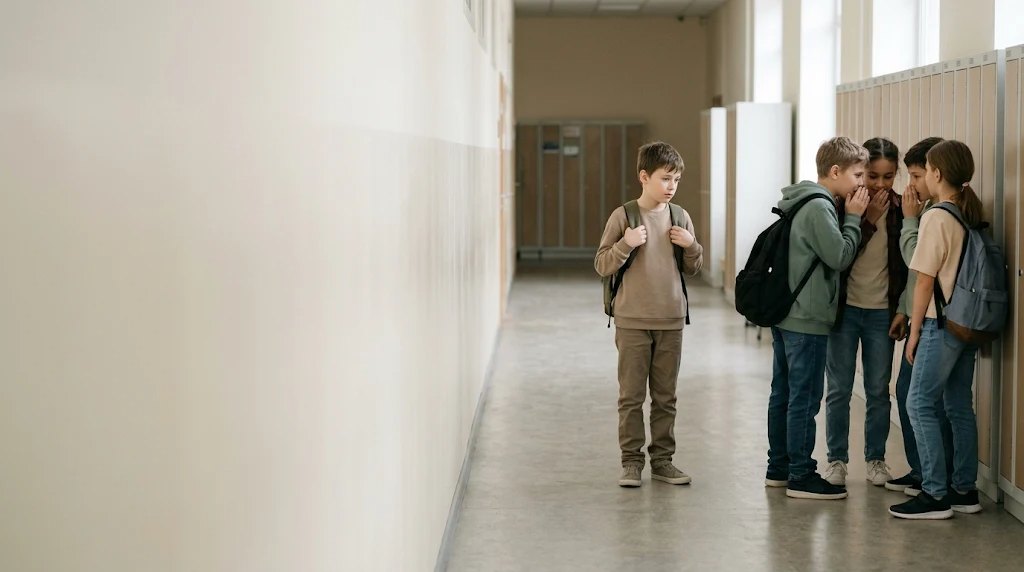
Some children who bully are also being bullied. In research and practice they are sometimes described as “bully-victims.” If your child is hurting others, it is worth asking gently whether anyone is hurting them, too. Our guide to the signs of bullying lists warning signs to watch for.
What makes a child a bully? Family, school and online factors
No single factor makes a child bully. Public health agencies describe “risk factors” that make aggressive behavior more likely and “protective factors” that make it less likely. They include a child’s own temperament and skills, relationships at home and with peers, the climate of the school, and what happens online. Risk factors are not destiny, and protective factors can be built.
CDC’s youth violence prevention pages, which also cover bullying, list risk factors that range from the individual (such as high emotional distress, poor behavioral control, or a history of being a victim of violence) to relationships (such as harsh, lax or inconsistent discipline, poor supervision, or social rejection by peers) and the wider community. These describe youth violence in general, not bullying alone, but they overlap closely with what schools see.
The same CDC page lists protective factors, and these are where parents have real influence. They include connectedness to family or to adults outside the family, being able to discuss problems with parents, frequent shared activities with parents, and a parent being consistently present at key times of day, such as waking up, coming home from school, evening meals or bedtime. Schools with clear rules and good supervision, and strong, caring relationships at school, also protect children.
It is important to say this plainly: having a risk factor does not mean a family has failed. Many children from loving, stable homes bully, and many children facing hard circumstances never do. Families are under pressures they did not choose. The point of knowing these factors is not to assign blame, but to find practical places to make things better.
Layers that shape bullying behavior
Change in any layer can help. Parents have the most direct influence on the inner two.
School climate. Bullying thrives where adults do not notice or do not act, and where bystanders feel they should stay quiet. When teachers respond consistently and children are encouraged to speak up, bullying has less room to grow.
Online spaces. Screens can make it easier to be cruel, because the child does not see the other person’s face. A group chat can also turn one unkind comment into a pile-on within minutes. Children who would never say something to a classmate’s face may type it.
Why does my child bully others? Questions to ask yourself
If you have learned your child is bullying, try to stay curious rather than defensive. Ask: When does it happen, and with whom? What does my child get out of it? Has anything changed recently at home, at school or with friends? Is my child being hurt too? The answers point to the right kind of help, without excusing what happened.
Many parents feel a rush of shame, anger or disbelief at this moment. Those feelings are normal. It may help to remember that a child who bullies is still a child who is learning, and that your reaction now can make a real difference to what happens next.
Here are some questions worth thinking through, ideally after you have calmed down and before you talk with the school:
- Pattern: Is this a single incident, or has it happened before? With one child, or several?
- Setting: Does it happen in a particular place (online, on the bus, at break time) or with a particular group of friends?
- Feelings: Has your child seemed angry, anxious, low or stressed lately?
- Changes: Has there been a move, a new sibling, a separation, an illness or a change of school or class?
- Their own experience: Is anyone treating your child badly, at school, online or elsewhere?
- Models: What does your child see about how people treat each other, at home, among older children, or in games and videos?
You do not need to answer all of these alone. Teachers, school counselors and your child’s doctor can help you see the fuller picture.
What to do if your child is bullying others: a step-by-step plan
Stay calm, get the facts, and make it clear the behavior must stop. Then help your child understand the harm, make amends, and learn new skills. Work with the school rather than against it, use fair and time-limited consequences, and keep watching over the following weeks. Change usually takes time, so plan for steady follow-up rather than one big conversation.
| Step | What to do | Why it helps |
|---|---|---|
| 1. Pause | Take time to calm down before talking to your child or the other family | Angry reactions make children defensive and less honest |
| 2. Listen and gather facts | Ask the school what happened; let your child tell their side without interruption | You need an accurate picture before deciding what to do |
| 3. Be clear | Say plainly that hurting others is not acceptable in your family | Children need to hear a firm, consistent message from you |
| 4. Build empathy | Ask how the other child might have felt; talk about the impact, not just the rule | Understanding harm is what makes change last |
| 5. Repair | Help your child make amends in a way agreed with the school: an apology, returning items, kind actions | Gives your child a way to put things right |
| 6. Fair consequences | Use short, relevant consequences (for example, supervised device use after online bullying) | Overly harsh or long punishments tend to breed resentment |
| 7. Teach new skills | Practice calming down, handling conflict and joining groups without putting others down | Children need something to do instead of bullying |
| 8. Follow up | Check in with the school and your child regularly over the next weeks | Shows you are serious and catches any return early |
Notice what is not on this list: humiliating your child, hitting or shouting, or using physical punishment. Responding to aggression with aggression teaches the very lesson you are trying to undo. Firm and warm is the goal.
Praise matters too. When you see your child including someone, handling a disagreement calmly or standing up for a classmate, say so specifically. Children tend to repeat what gets noticed.
How to talk to your child about bullying behavior
Talk when you are both calm, in private, and keep the focus on behavior rather than character: “What you did was hurtful” rather than “You are a bully.” Ask open questions, listen to the answers, and finish with a clear expectation and a plan. Labels can stick and become part of how a child sees themselves, which makes change harder.
Some phrases that tend to help:
- “I love you, and what happened is not okay. Let’s work out how to fix it.”
- “Tell me what was going on for you when that happened.”
- “How do you think it felt to be on the other side?”
- “What could you do next time you feel like that?”
- “What would help you make this right?”
And some that tend to backfire:
- “You’re a bully.” (A label, not a behavior.)
- “How could you embarrass me like this?” (Makes it about you, not the other child.)
- “They probably deserved it.” (Excuses the behavior.)
- “Wait until your father/mother gets home.” (Delays and adds fear rather than understanding.)
If your child denies everything, you do not need a confession to set a clear expectation. You can say, “Whatever happened, I want to be sure nobody gets hurt from now on, and here is what I expect.” Keep the door open for them to tell you more later.
Bullying in Japan: ijime, MEXT data and the 2013 law
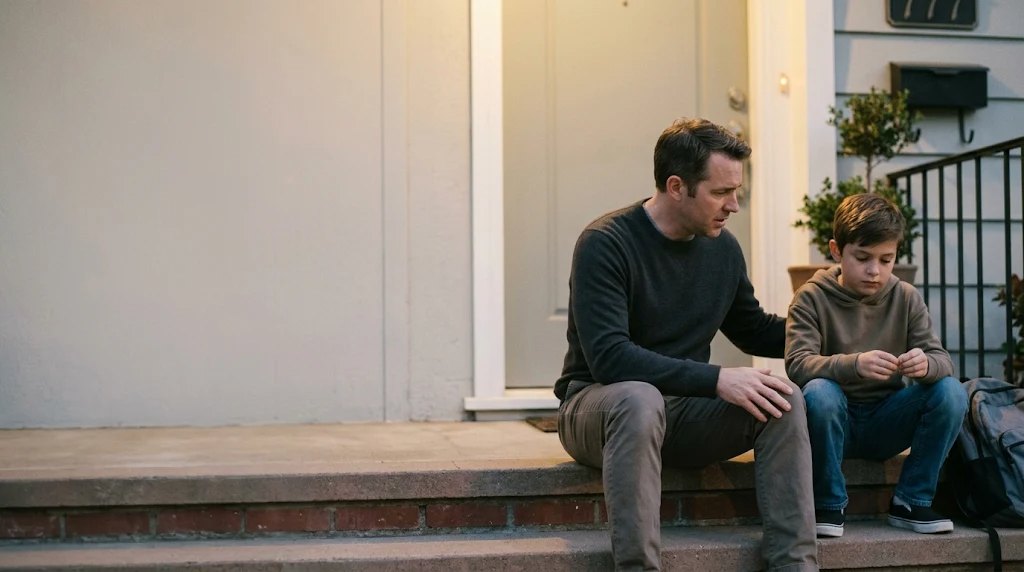
In Japan, bullying is called ijime. The Act for the Promotion of Measures to Prevent Bullying (Act No. 71 of 2013) defines it broadly, including online acts, from the point of view of the child who feels hurt. In the education ministry’s FY2024 survey, schools recognized 769,022 cases, a record high, partly because schools are now encouraged to record even small cases.
The law, promulgated on 28 June 2013, defines bullying as psychological or physical acts, including those done over the internet, by other children who have a certain relationship with the child (such as attending the same school), where the targeted child feels mental or physical distress (Article 2). The focus on how the targeted child feels is important: under this definition, “it was only a joke” does not settle the matter.
The law also sets out roles for families and schools:
| Article | What it says (summary) | What it means for parents |
|---|---|---|
| Article 2 | Defines bullying, including online acts, based on the distress of the targeted child | Teasing that hurts can count as ijime, even if it was “meant as a joke” |
| Article 9 | Guardians should try to guide their children so they do not bully, protect them if they are bullied, and cooperate with school measures; this does not reduce schools’ responsibility | Parents and schools share the job; it is not on families alone |
| Article 22 | Each school sets up an organization of several staff and specialists (such as psychology or welfare experts) to prevent and handle bullying | You can ask who is on your school’s anti-bullying team |
| Article 23 | Schools check the facts, then give ongoing support to the targeted child and family and ongoing guidance to the child who bullied, with advice to their guardians; they may arrange for the child who bullied to study in another room if needed | If your child bullied, expect the school to contact you and offer guidance, not just punishment |
| Article 28 | “Serious incidents” (for example, suspected serious harm) require a formal investigation | Serious cases follow a set process |
The numbers come from the Ministry of Education, Culture, Sports, Science and Technology (MEXT). Its FY2024 survey of elementary, junior high, high schools and special needs schools found 769,022 recognized bullying cases, up from 732,568 the year before, or 61.3 cases per 1,000 students. By the end of the school year, 76.1% of cases were counted as resolved. The number of “serious incidents” was 1,404, up from 1,306.
These figures are high, but MEXT itself explains that part of the rise reflects wider understanding of the legal definition and schools actively recognizing bullying, including bullying on social media. In other words, a high number can also mean schools are looking harder. For parents, the practical message is that Japanese schools have a legal duty to act, and you can ask your school about its anti-bullying policy and team.
If bullying has made school feel unbearable for your child, whether as the target or after a hard conflict, our guide to school refusal in Japan explains what happens when children stop attending and what alternatives exist.
Preventing bullying at home: building empathy and connection
Prevention starts with everyday connection: regular time together, conversations about friendships, clear family values about kindness, and calm ways of handling conflict at home. Talk about what your child sees online and in games. Children who feel heard at home, and who know adults will notice and care how they treat others, are less likely to bully.
Some practical ideas:
- Make talking normal. Ask about friendships, not just grades. “Who did you sit with at lunch?” often opens more than “How was school?”
- Name feelings at home. When children have words for anger, jealousy and embarrassment, they are less likely to act them out on others.
- Model repair. When you lose your temper, apologize. Children learn that mistakes can be fixed.
- Talk about bystanders. Discuss what your child could do if they see someone being picked on: tell an adult, stand with the target, refuse to laugh along.
- Stay involved online. Agree on family rules for devices, and talk about how messages and photos can hurt.
- Celebrate kindness. Notice and praise inclusion, generosity and courage, not only achievement.
None of this requires a perfect home. Small, steady habits matter more than grand gestures.
When to get extra help
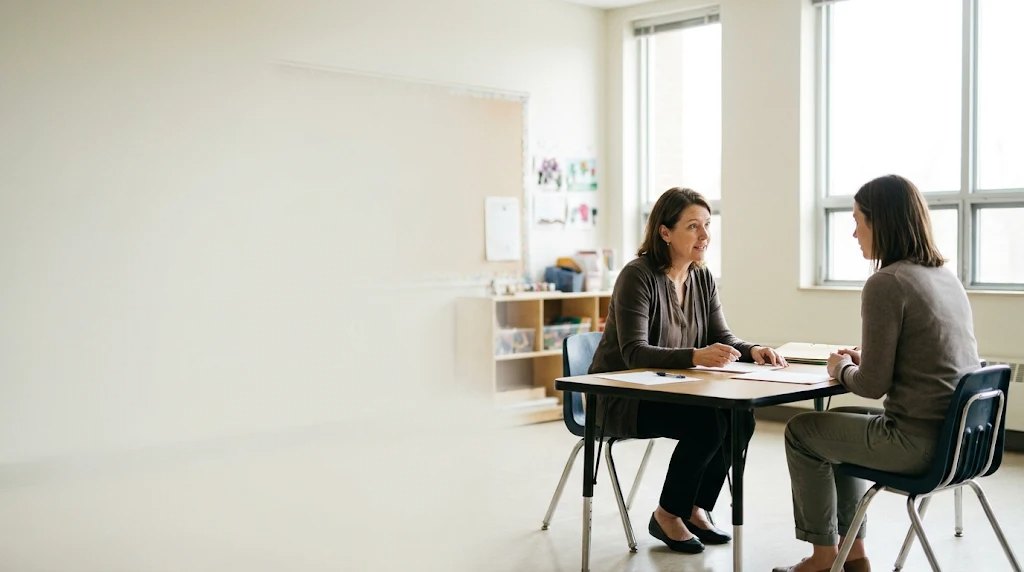
Seek more help if the bullying continues after school and home have acted, if it involves violence, threats or sexual content, or if your child seems very angry, anxious, low or withdrawn. A school counselor, your child’s doctor or a mental health professional can look at what lies underneath. If anyone is in immediate danger, contact emergency services.
Extra help is not a sign that you have failed. Sometimes bullying is linked to difficulties that need specialist support, such as trouble managing emotions, problems at home, or the child’s own experience of being hurt. Getting help early can make things easier for everyone, including the child who was targeted.
In Japan, you can start with your child’s homeroom teacher, the school’s anti-bullying team, the school counselor, or your local board of education. Our guide to where to get help in Japan lists public consultation services and hotlines you can contact.
Frequently asked questions
Here are short answers to common questions about why kids bully. In brief: bullying usually has several causes at once, it is a behavior that can change rather than a fixed trait, and the best results come when parents stay calm, set clear expectations, and work together with the school.
Why do kids bully other kids?
Common reasons include wanting popularity or control, fitting in with a group, copying behavior they have seen, struggling with strong feelings, and having been bullied themselves. A school or online environment where unkindness goes unchallenged also makes bullying more likely. Usually several reasons combine.
Is my child a bad person if they bully?
No. Bullying is a behavior, not a personality. Many children who bully learn to stop, especially when adults respond firmly and kindly. Try to avoid calling your child “a bully,” and focus instead on what they did and how to put it right.
Is bullying caused by bad parenting?
Not in a simple way. Children from all kinds of families bully. Public health agencies list family factors, such as very harsh or inconsistent discipline and limited supervision, among many risk factors, alongside school, peer and online influences. Parents are an important part of the solution, whatever the causes.
Can a child be both a bully and a victim?
Yes. Some children are bullied in one setting and bully others in another. If your child is hurting others, it is worth gently checking whether anyone is hurting them. Our guide to the signs of bullying can help you spot warning signs.
What should I do if the school says my child is bullying?
Thank the school for telling you, ask for specific facts, and listen to your child’s side calmly. Agree a plan together: clear expectations, a way to make amends, fair consequences and regular check-ins. Working with the school, rather than against it, usually leads to faster change.
Should I punish my child for bullying?
Consequences can help, but they work best when they are fair, short and connected to what happened, such as supervised device use after online bullying. Pair them with teaching empathy and new skills. Harsh or humiliating punishments tend to make children more resentful and secretive.
How is bullying handled in Japanese schools?
Under Japan’s 2013 anti-bullying law, schools must have an anti-bullying team, check the facts when bullying is suspected, support the targeted child, and give ongoing guidance to the child who bullied, with advice to their guardians. Serious incidents require a formal investigation.
Can bullying behavior really change?
Yes. With consistent responses from home and school, a chance to repair harm, and help with emotions and social skills, many children change how they treat others. It can take weeks or months, so keep following up and noticing improvements.
Summary: understanding the “why” without excusing the behavior
Kids bully for many reasons: status, control, fitting in, copying, big feelings and their own hurt, all shaped by family, school and online settings. Understanding these causes helps parents respond in ways that work. Stay calm, set clear limits, build empathy, help your child make amends, and work with the school. Behavior can change.
If your child is the one being hurt, remember that it is never their fault, and that you can ask the school to act. If your child is the one hurting others, remember that this moment does not define them, and that your calm, steady response is one of the most powerful tools you have. For families in Japan who are thinking about different learning options after a hard school experience, our school refusal in Japan guide is a good next step.
- U.S. Centers for Disease Control and Prevention, “About Bullying”: cdc.gov (checked 23 November 2026)
- U.S. Centers for Disease Control and Prevention, “Risk and Protective Factors” (Youth Violence Prevention): cdc.gov (checked 23 November 2026)
- Ministry of Education, Culture, Sports, Science and Technology (MEXT), summary of the FY2024 survey on student guidance issues including bullying and futoko (in Japanese): mext.go.jp (checked 23 November 2026)
- Act for the Promotion of Measures to Prevent Bullying (Act No. 71 of 2013), e-Gov Law Search (in Japanese): laws.e-gov.go.jp (checked 23 November 2026)
Published: 23 November 2026 / Last updated: 23 November 2026