
Menu
START HERE
Home School refusal in Japan ADHD, autism and school Signs of bullying Where to get helpWAYS TO LEARN
Free schools Education support centers Online schools Homeschooling in Japan International schools Correspondence high schoolsJAPANESE SCHOOLS
How Japanese schools work School rules explained Attendance credit and costs Japanese phrases for school Glossary of school terms Learning Place Finder 日本語サイトへSigns Your Child Is Being Bullied: Warning Signs, Why It Happens, and What Parents Can Do
Rainbow Star by Nijiiro is operated by NIJIN Inc. NIJIN Academy, an online learning place mentioned in this article, is also a NIJIN Inc. business, as is NIJIN GLOBAL ACADEMY. We describe NIJIN Academy only using what its official website says, and we point you to public and independent sources for everything else. This guide is general information, not medical, psychological or legal advice.
The short answer: the most common signs your child is being bullied are changes, not single events. Watch for a child who suddenly does not want to go to school, has frequent headaches or stomach aches, loses or damages belongings, eats or sleeps differently, drops friends, seems upset after being online, or becomes unusually angry or quiet. If you notice a pattern, talk gently, listen without judging, write down what you learn, and contact the school. If your child is in danger or talks about hurting themselves, get help immediately.
- Warning signs by category: physical, emotional, social, school and online
- How to tell bullying apart from ordinary friendship conflict
- Why some children are targeted, and why it is never their fault
- Word-for-word scripts for starting the conversation
- A step-by-step plan for home and school, plus crisis contacts
- What families living in Japan should know about Japanese law
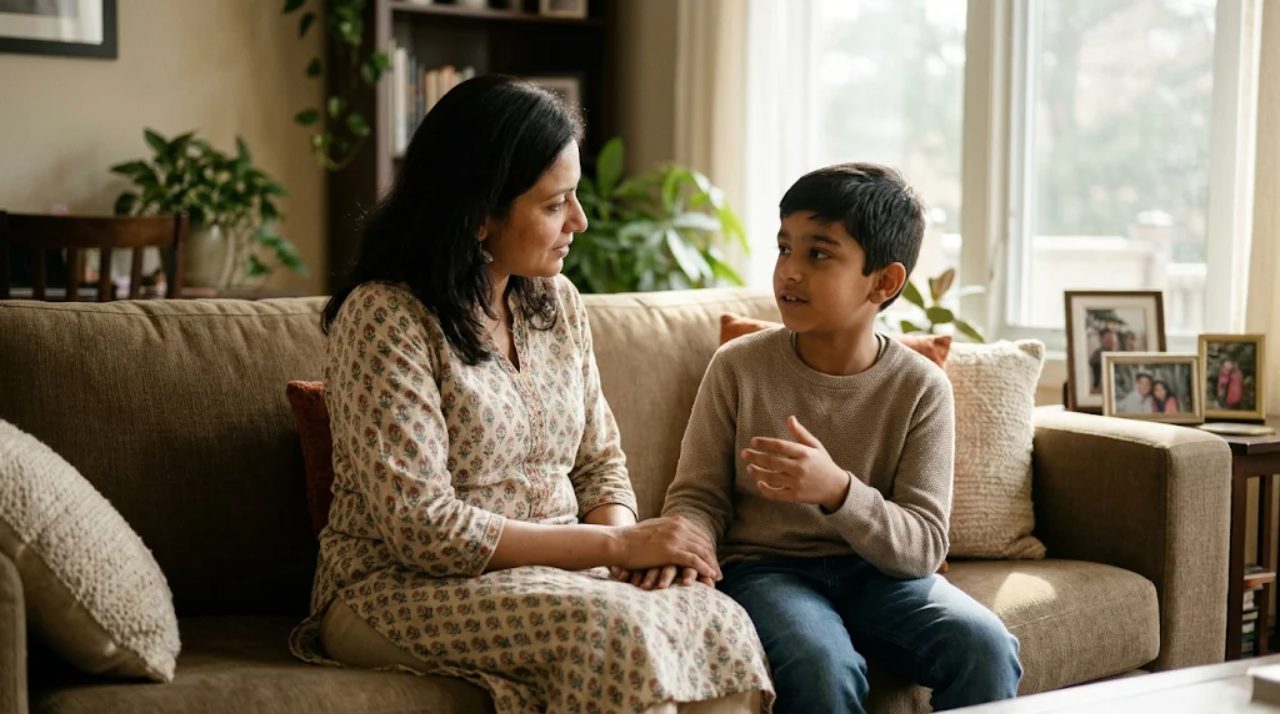
What are the signs your child is being bullied?
The clearest signs are sudden changes in how your child feels, behaves or handles everyday routines. Common examples include not wanting to go to school, unexplained injuries, missing or broken belongings, frequent headaches or stomach aches, changes in sleep or appetite, losing friends, falling grades and being upset after using a phone. One sign alone proves nothing; a pattern over days or weeks deserves a gentle conversation.
It helps to sort what you are seeing into groups. Children show distress in different ways: some through their bodies, some through their mood, some through who they spend time with. The table below is a checklist, not a diagnosis. Many of these signs can also come from other stresses, such as anxiety, a family change or a learning difficulty, so treat them as a reason to talk, not as proof.
| Category | Signs you might notice | What it can look like at home |
|---|---|---|
| Physical | Bruises, scratches or torn clothes with no clear explanation; frequent headaches or stomach aches; feeling “sick” on school mornings | “I fell over” every week; asking to stay home on certain days |
| Belongings and money | Lost or damaged books, devices, lunch or clothing; asking for extra money; hungry after school | A new pencil case that “broke” twice in a month |
| Emotional | Sadness, irritability, anger outbursts, low self-esteem, nightmares, crying easily, saying “I’m stupid” or “nobody likes me” | Snapping at siblings; going quiet after school |
| Social | Stops mentioning friends, is not invited to parties, spends breaks alone, avoids clubs or the school bus | A best friend’s name disappears from conversation |
| School | Refuses or delays going, grades drop, wants to be driven instead of walking, avoids certain lessons or places (toilets, changing rooms, playground) | Takes a long route home; wants to leave very early or very late |
| Online | Upset or tense after using a phone or game; suddenly stops using a device, or cannot put it down; hides the screen; deletes accounts | Jumps when a notification arrives |
| Urgent | Talks about hurting themselves, feeling hopeless, or not wanting to be alive; gives away belongings | Seek professional help the same day (see the safety section below) |
Younger children often show distress through their bodies and through play: clinginess, bedwetting returning, or acting out a scene with toys where one figure is always left out. Teenagers are more likely to withdraw, stay in their room and guard their phone. Neither group is “overreacting.” They are telling you something in the language they have.
Why children often don’t tell their parents
Many children keep bullying secret because they feel ashamed, fear that telling will make it worse, worry that adults will overreact, or have started to believe they deserve it. Some fear losing their phone if they mention online abuse. Knowing these reasons helps you respond in a way that makes it safe for your child to keep talking, rather than shutting the conversation down.
Children may say things like: “I didn’t want you to go to the school and make a scene.” “I thought it was my fault for being weird.” “They said they’d post the photo if I told.” “You were already stressed about work.”
Each of these is a reasonable fear from a child’s point of view. Your job is not to get the full story in one evening. It is to show, again and again, that telling you leads to support, not to punishment, panic or a decision made without them. If your child knows that you will not take their phone away for being a victim of online abuse, for example, they are far more likely to show you what is happening.
Bullying or normal conflict? How to tell the difference
Bullying is repeated, unwanted aggressive behaviour where one side has more power, such as more friends, size, status or information. Ordinary conflict happens between equals, goes both ways and usually settles. The US Centers for Disease Control and Prevention (CDC) defines bullying as involving a real or perceived power imbalance that is repeated or highly likely to be repeated.
This distinction matters because it changes what helps. Friends who argue can often be coached to repair things. A child being bullied should never be told to “sort it out together” with the person hurting them, because the power gap means the conversation is not fair.
| Normal conflict | Bullying | |
|---|---|---|
| Power | Roughly equal; both can speak up | Unequal: popularity, size, age, group numbers, or control of photos and secrets |
| Frequency | Occasional, linked to a specific disagreement | Repeated, or a single serious act likely to be repeated |
| Intent | Each wants to win the point or be understood | One side seeks to hurt, humiliate, exclude or control |
| Feelings afterwards | Both sides upset; both may want to make up | One side is afraid or ashamed; the other may be pleased or indifferent |
| Resolution | Often settles with time, an apology or adult guidance | Does not stop on its own; needs adult action and protection |
| Best first step | Coach problem-solving and empathy | Listen, record, involve the school; never force a face-to-face “making up” |
Teasing between friends that both enjoy is not bullying. But “just joking” stops being a joke when one child keeps asking for it to stop, or when the whole group laughs and one child does not. If you are unsure, ask your child: “When they say that, does it feel like a joke you share, or like they are laughing at you?”
Why do some children get bullied? Traits without the blame
Children are usually targeted for being seen as different, or for being in a situation where adults are not watching closely. UNESCO’s 2019 report Behind the Numbers found that physical appearance was the most frequent reason students reported being bullied, followed by race, nationality or colour. Difference is not a flaw. The responsibility always lies with those who bully and the adults who allow it.
Our Japanese-language article on this topic was clear about one thing, and we keep it here: there is no such thing as a child who deserves to be bullied. Looking at “traits” is only useful for understanding risk and offering extra support. It is never a list of things your child should change about who they are.
With that in mind, children who are often targeted include those who:
- Look or sound different from the group: appearance, weight, disability, accent or language.
- Are new to a school, a country or a friendship group, including children of expat and migrant families.
- Are neurodivergent, for example autistic, with ADHD or with a learning difference, and may read social cues differently. Our guide to neurodivergent children and school covers support in more detail.
- Are quiet, gentle or sensitive, and less likely to hit back or report.
- Stand out in other ways: unusually able, very creative, from a different religion or culture, or not fitting gender expectations.
- Have few allies at that moment, because friendships changed or a class was reshuffled.
Look at the setting as much as the child. Bullying grows where adults are not supervising (corridors, buses, group chats), where teasing is treated as normal, and where children learn that reporting gets nobody anywhere. That is why the most effective changes usually happen in the environment, not in the child.
How to talk to your child: scripts that help
Start with calm, open questions at a relaxed moment, such as in the car or while cooking, rather than a formal sit-down. Listen far more than you speak, thank your child for telling you, say clearly that it is not their fault, and promise to make a plan together rather than acting behind their back. You do not need perfect words, just steady ones.
The American Academy of Pediatrics (AAP), on its HealthyChildren.org site, advises parents to listen first and ask what happened without judgment, and not to rush to fix things. These phrases put that into practice:
| Moment | Try saying | Try to avoid |
|---|---|---|
| Opening the topic | “You’ve seemed tired after school lately. How are things with the other kids?” | “Is someone bullying you? Tell me who.” |
| Everyday check-in | “Who did you sit with at lunch? What was the best and worst part of today?” | “How was school?” (usually answered with “fine”) |
| When they tell you | “Thank you for telling me. That took courage. This is not your fault.” | “What did you do to make them act like that?” |
| When you feel angry | “I’m upset that this happened to you. I’m not upset with you.” | “I’m going straight to that school tomorrow.” |
| Making a plan | “Let’s decide together what to do next. Nothing happens without you knowing.” | “Just ignore them.” / “Hit them back.” |
| Online abuse | “You won’t lose your phone for telling me. Can we save the messages together?” | “That’s it, no more phone.” |
If your child does not want to talk, that is fine. Say, “Whenever you’re ready, I’m here,” and try again another day. Some children find it easier to write a note, draw what happened or send you a message from their room.
The AAP also suggests practising simple responses with your child, which it calls “stop, walk, talk”: firmly saying something like “Enough” or “Not cool,” walking away calmly and telling a trusted adult. Role-playing this at home can help a child feel less frozen in the moment. Make clear, though, that it is not your child’s job to stop the bullying on their own.
What to do if your child is being bullied: a step-by-step plan
Stay calm, listen, and reassure your child first. Then record what happened, contact the school in writing, agree on a safety plan, and follow up on a set date. Look after your child’s wellbeing throughout, through friendships, activities and professional support if needed. Escalate to school leaders, education authorities or the police when bullying continues or involves violence, threats or crime.
Stay calm. Thank your child, say it is not their fault, and ask what they want to happen.
Dates, times, places, who was involved, who saw it, what was said. Photograph injuries and damaged items. Screenshot online messages with dates and usernames.
Email the class teacher, form tutor or homeroom teacher, and ask for a meeting. Ask for the school’s anti-bullying or behaviour policy.
Who your child can go to, safe places at break time, seating, supervision, and how the school will check in.
Ask your child how things are, then check back with the school, for example after one to two weeks.
School leadership, then the governing body, district or education authority. Police for assault, theft, threats or hate crimes. A doctor or counsellor if your child’s wellbeing is suffering.
A few things to hold back from, even when you are furious. Do not confront the other child yourself. Do not post about the situation on social media. Do not go straight to the other family’s door; the AAP notes that parents may feel tempted to call the other child’s parents, and suggests focusing first on helping your child feel more in control. These moves can escalate the situation and make your child feel less in control.
Keep your child involved in every decision. A plan they helped make is a plan they are more likely to tell you about when it is not working.
How to work with the school
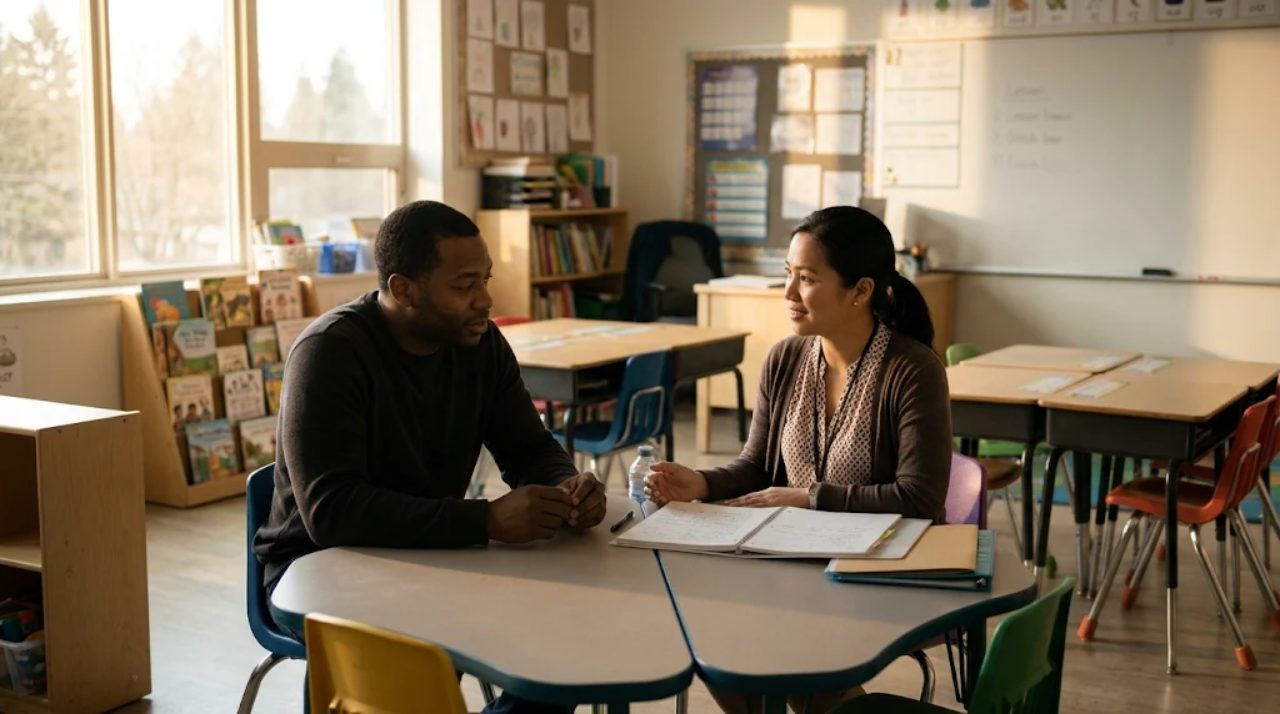
Schools usually respond best to calm, specific, written requests. Describe what happened using your notes, explain how it is affecting your child, ask what the school’s policy says, and agree who will do what by when. Keep copies of every email. If nothing changes, move up the school’s complaint process step by step rather than skipping straight to the top.
Rules differ by country, so it helps to know what you can ask for. In England, for example, GOV.UK says that by law all state (not private) schools must have a behaviour policy that includes measures to prevent all forms of bullying among pupils, and that teachers, pupils and parents must be told what it is. Many international and private schools have their own anti-bullying policies too; ask for a copy.
A simple email can make a big difference. You might write:
“Dear Ms Lee, I am writing because my son, Sam (Year 5), has told me that he has been pushed and called names by a group of children at lunchtime on at least four occasions since 3 November. I have attached a short list of dates and what he described. He is now reluctant to come to school. Could we meet this week to discuss what the school can do to keep him safe, and could you send me the school’s anti-bullying policy? Thank you for your help.”
At the meeting, ask practical questions: Has anyone on staff seen this? What will happen now? Who is Sam’s trusted adult in school? How will you check that it has stopped? When shall we speak again? Then summarise what was agreed in a short follow-up email. If your child attends an international school, our guide to bullying at international schools covers what to ask in more detail.
Cyberbullying: signs and first steps
Cyberbullying is bullying through phones, games, messaging apps and social media. It can follow a child home and reach a wide audience quickly. Watch for a child who seems upset or secretive after going online, suddenly avoids a device, or deletes accounts. Save evidence before anything is deleted, then block and report the account, and tell the school if classmates are involved.
It is common. The CDC reports that more than one in six US high school students said they had been bullied electronically in the past year, and about one in five had been bullied on school property.
- Do not reply to the messages, and do not let your child retaliate.
- Screenshot messages, posts and profiles, including dates, times and usernames.
- Block and report through the app or game; most platforms have reporting tools.
- Tell the school if the people involved are students there, even if it happened outside school hours.
- Contact the police if there are threats, sexual images of a child, or demands for money or images.
The AAP suggests working with your child to block or unfriend the person bullying them, and not forwarding or “liking” hurtful posts. Taking the device away can make a child less likely to tell you next time, so try to solve it together. For teenagers, our detailed guide on cyberbullying for expat parents walks through each platform and step.
When it’s an emergency: safety risks and crisis lines
If your child is in immediate danger, call your local emergency number now. If your child talks about wanting to die, hurting themselves, or seems hopeless, treat it seriously and get professional help the same day. Bullying can affect a child’s mental health deeply, and you do not have to judge the risk alone. Doctors, counsellors and helplines can help.
These services were checked on their official websites on 20 November 2026:
| Where you are | Service | How to reach it |
|---|---|---|
| Anywhere | Emergency services | Call your local emergency number if anyone is in immediate danger (in the UK, GOV.UK says to call 999) |
| United States | 988 Suicide & Crisis Lifeline | Call or text 988, or chat online. Available 24/7; free and confidential |
| United Kingdom | Childline (for young people under 19) | Call 0800 1111, free from any phone |
| Australia | Kids Helpline | Call 1800 55 1800, or chat online. Available 24/7 |
| Japan | 24-Hour Children’s SOS Dial (MEXT, Japanese) | Call 0120-0-78310, including nights and holidays; for children and parents |
If you live in the Philippines, India, Singapore or elsewhere, ask your child’s school counsellor or family doctor for local services, and save the number in your phone before you need it. Our page on where to get help lists support for families living in Japan.
Also see a doctor if your child has injuries, ongoing physical complaints, or big changes in sleep, eating or mood that last more than a couple of weeks. A professional can check what else may be going on and support your child’s recovery.
If your family lives in Japan
Japan has a specific law: the Act for the Promotion of Measures to Prevent Bullying (Act No. 71 of 2013). It defines bullying from the child’s side: acts by another child with a certain relationship to them (for example, at the same school) that have a psychological or physical effect, including acts carried out online, and that make the targeted child feel mental or physical distress. Schools must respond, and some cases count as “serious incidents” (jūdai jitai), which require a formal investigation. The Act covers schools defined under Japan’s School Education Act, so if your child attends an international school, ask which rules and policies apply.
Under Article 28 of the Act, a serious incident is where bullying is suspected of having caused serious harm to a child’s life, mind, body or property, or where a child is suspected of having been forced to miss school for a considerable period because of bullying. Knowing this term helps when you speak to a school: you can ask in writing whether the school is treating the situation as a possible serious incident.
Language can be a real barrier for international families in local schools. Ask for an interpreter, bring a written summary, and keep copies of everything. We have written a full, practical guide for this situation, so we will not repeat it here: Bullying at a Japanese school: what parents can do. Our overview of the Japanese school system and the list of Japanese phrases for school may also help you prepare.
When school stops being a safe place: other options
If bullying continues despite your efforts, or your child can no longer face school, it is okay to step back. Safety and mental health come first. Options can include a class or school change, a period of rest, online schooling, homeschooling, or alternative learning places. A break from school is not failure; it can be the first step to your child feeling like themselves again.
Some children who have been bullied develop strong school avoidance. If that is happening, our guide to school refusal explains how to support a child who cannot go, without pushing or giving up. Families in Japan can compare free schools, online schools and homeschooling, including how attendance can sometimes still be recognised.
Whatever you choose, keep three things in place: at least one adult your child trusts, some contact with peers who are kind, and something your child enjoys and feels good at. These protect children while they heal.
Frequently asked questions
These are the questions parents most often search for when they suspect bullying. In short: look for patterns of change, keep your child involved in every step, go through the school before contacting other families, never encourage fighting back, and contact the police or emergency services when there is violence, threats, crime or any risk to your child’s safety.
What are the first signs of bullying?
Often the earliest signs are small changes: reluctance to go to school, vague illnesses on school mornings, coming home hungry, losing belongings, or no longer mentioning friends. Look for patterns over a few weeks, and start with a relaxed, open question rather than an interrogation.
Why is my child being bullied?
Children are usually targeted because they are seen as different or are in a situation with less adult supervision or fewer friends. It is never because they deserve it. The responsibility lies with those who bully and with the adults who must stop it.
Should I contact the other child’s parents?
Usually not as a first step. Going through the school is generally safer, because staff can see the whole picture and act fairly. The AAP suggests focusing first on helping your child feel more in control, rather than rushing to call the other family. Direct contact can escalate things and put your child in a harder position.
Should I tell my child to fight back?
No. Fighting back can lead to injury or to your child being punished. Instead, practise saying “Stop” firmly, walking away, staying near friends or adults, and always telling a trusted adult.
Can I keep my child home from school?
A short break may help when your child is overwhelmed, but tell the school why, so they can act. Rules on absence differ by country. If your child cannot return, talk with the school about a safe plan or consider other learning options.
When should I go to the police?
Contact the police if there is violence or assault, theft, repeated harassment or threats, or hate crimes; GOV.UK lists these as forms of bullying that may be illegal in the UK. Sexual images of a child, or demands for images or money, should also be reported to the police. In an emergency, call your local emergency number.
Is my child being bullied or just going through normal friendship drama?
Ordinary conflict happens between equals and settles. Bullying is repeated and involves a power imbalance, so one child keeps getting hurt and cannot make it stop. If your child feels afraid or ashamed rather than simply annoyed, treat it as possible bullying.
How can I help my child recover?
Keep listening, praise their courage, and protect time for friends and activities they enjoy. Watch their mood over the following months. If anxiety, low mood or sleep problems persist, ask a doctor or counsellor for support.
- U.S. Centers for Disease Control and Prevention, “Bullying” (Youth Violence Prevention): cdc.gov (checked 20 November 2026)
- American Academy of Pediatrics, HealthyChildren.org, “Why Bullying Hurts All Children—and What Parents Can Do About It”: healthychildren.org (checked 20 November 2026)
- GOV.UK, “Bullying at school: The law”: gov.uk (checked 20 November 2026)
- UNESCO, Behind the Numbers: Ending School Violence and Bullying (2019), full report (PDF hosted by UNICEF), section 2.3 and Figure 15: unicef.org (checked 20 November 2026)
- 988 Suicide & Crisis Lifeline: 988lifeline.org (checked 20 November 2026)
- Childline (NSPCC): childline.org.uk (checked 20 November 2026)
- Kids Helpline (Australia): kidshelpline.com.au (checked 20 November 2026)
- Ministry of Education, Culture, Sports, Science and Technology (MEXT), Japan, “Act for the Promotion of Measures to Prevent Bullying (Act No. 71 of 2013)” (Japanese): mext.go.jp (checked 20 November 2026)
- MEXT, “24-Hour Children’s SOS Dial” (Japanese): mext.go.jp (checked 20 November 2026)
- NIJIN Academy official website (Japanese): academy.nijin.co.jp (checked 20 November 2026)
Published: 20 November 2026 / Last updated: 20 November 2026