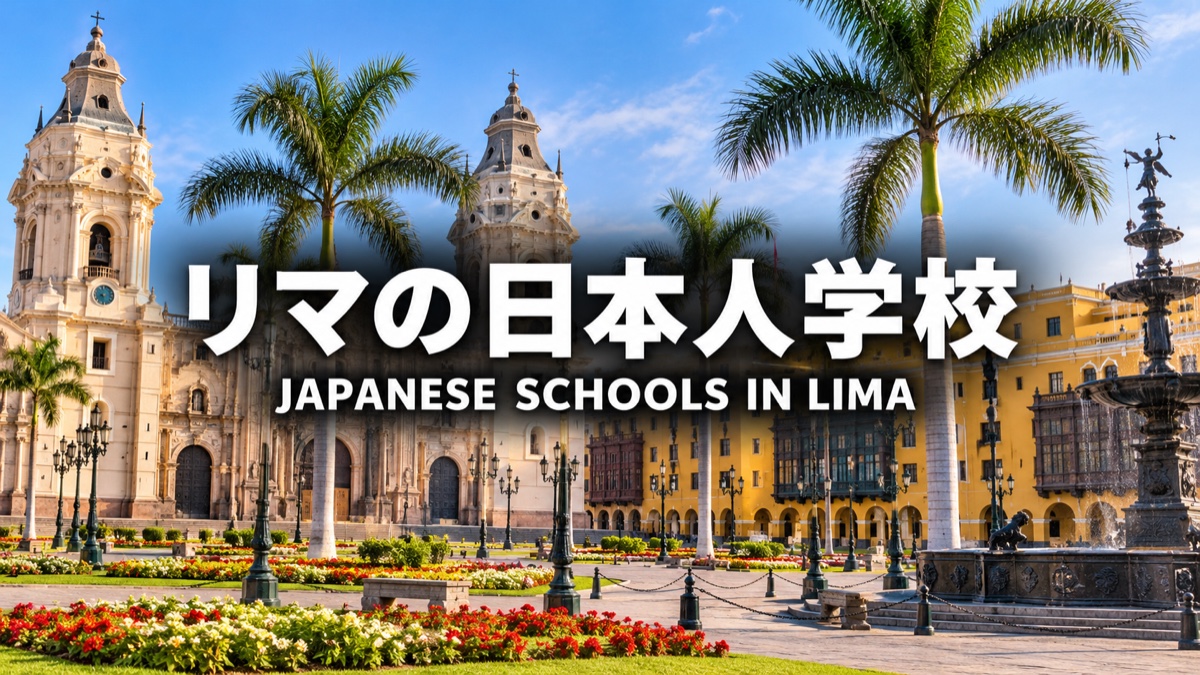
Japanese Schools in Lima: Nikkei Local Schools, Japanese Courses and International Options (2026)
Families searching for a Japanese school in Lima need to distinguish a full-time Japan-curriculum school, a weekend supplementary school and Japanese classes within a locally recognized Nikkei school. We could not verify current admissions information for an independent Japanese day school or hoshuko in the public Embassy sources reviewed. La Unión offers a locally structured pathway with Japanese and Nikkei cultural components.
Nijiiro is operated by NIJIN Inc. TOMODACHI JAPAN, introduced in this article, is also a NIJIN Inc. service. The schools and services below are included where their official information can be checked; the order is not a ranking.
1. Start with the region and commute in Lima
Regional fit:Families searching for a Japanese school in Lima need to distinguish a full-time Japan-curriculum school, a weekend supplementary school and Japanese classes within a locally recognized Nikkei school. We could not verify current admissions information for an independent Japanese day school or hoshuko in the public Embassy sources reviewed. La Unión offers a locally structured pathway with Japanese and Nikkei cultural components.
Options confirmed in Lima include a full-time Japanese-curriculum school where verified, local or international weekday schools, and Japanese-language classes. Current weekend supplementary-school schedules could not be confirmed in every area; ask providers about current days, grades and eligibility. the city and nearby districts
This guide separates school type, location, schedule and cost so your family can contact the right provider. Dates, admissions, fees and transport can change, so use the linked primary sources and confirm details directly before applying.
| Learning arrangement | Typical schedule | May suit families who |
|---|---|---|
| Full-time Japanese school | Weekdays | Want a Japanese school curriculum and daily school life |
| Japanese supplementary school | Often weekends | Want Japanese study alongside a local or international school |
| Local school plus home or online learning | Weekdays plus a family plan | Want the local curriculum while continuing Japanese |
2. A full-time school, a supplementary school and a local school serve different roles
School types:A name containing “Japanese School” does not always mean a Monday-to-Friday school. When comparing options in Lima, ask how many days children attend, which subjects are taught and whether the child needs a separate weekday enrollment.
A full-time Japanese school is an overseas school recognized by Japan’s Ministry of Education for a curriculum corresponding to Japanese elementary or lower-secondary education. A supplementary school usually supports Japanese language and subjects for children who attend a local or international weekday school. Its venue, schedule, age range and entry rules are set by the operator.
A local or international school can provide the main weekday education in another language or curriculum. Some families add a Saturday Japanese class, home study or an online language program. These arrangements do not automatically provide the same enrollment status or qualifications, so confirm attendance, progression and transfer records with the relevant schools.
Use one comparison sheet for: school type, address and weekly travel, languages and subjects, age and entry requirements, total annual cost, and documents needed for a future transfer. This prevents options with very different schedules from being compared as though they were the same kind of school.
Local check: La Unión, Newton and Markham are in different districts. Ask about daily transport, start times, buses and sibling pickups from the likely home instead of treating them as interchangeable Lima schools.
3. Japanese-language schools and institutions in Lima
School options:The MEXT and official school listings reviewed for this guide include 0 full-time Japanese school campuses and 0 separately classified private overseas facilities. The table shows their locations and categories; it does not establish that a campus is reachable from your home or has a vacancy in your child’s grade.
the city and nearby districts
The supplementary programs are shown separately below. They have different schedules, purposes and admissions arrangements, so do not count them as extra full-time campuses.
Local check: Its Japanese lessons and cultural activities connect Nikkei heritage with local education. That does not establish a hoshuko teaching Japanese subjects from Japanese textbooks; ask about subjects, hours and materials.

4. School profiles and types in Lima
School profiles:A national or embassy list is a starting point for identifying a school’s category. It does not tell you whether a child’s grade has an opening, what the daily timetable looks like or which neighborhoods are served. If a page is dated or discusses a previous school year, ask the office for the current admissions guide and fee schedule.
Local check: La Unión’s admission information refers to family membership and background. Ask about current dues, procedures, interviews and places; do not assume an earlier application window is still open.
5. Local Japanese-language and weekday school options
Supplementary programs:When no full-time Japanese campus is practical, a local supplementary school may offer a way to maintain Japanese. The Embassy of Japan in Peru publishes textbook information for Japanese children of compulsory-school age. In June 2026 it also invited facilities to apply for supplementary-school designation. That is an application notice, not proof that no Lima hoshuko exists or a list of designated schools. Confirm current venues and schedules with the Embassy.
Do not infer a program’s catchment from its name alone. Confirm the current building, day of the week, grade range, available places and admissions process. Some operators rent a host-school building, have moved sites or provide the precise address after an inquiry.
The table reports what public sources establish. A listing by an embassy does not mean that current fees or class availability have been confirmed. Ask whether you can observe a lesson, how Japanese-language readiness is assessed, what home practice is expected and whether parents have an operating role.
Local check: The Embassy notice from June 2026 invited facilities to apply for supplementary-school designation. It is not a list of approved schools, Lima venues or weekly schedules. Ask the Embassy about decisions and current operation.
Local and Nikkei schools available in Lima
A cooperative school in Pueblo Libre with Japanese-language and cultural learning, but not a school following Japan’s national curriculum. Its 2028 application window was published for August 2026; ask about current applications and membership. Official school site
A local/international school in La Molina with 2026 admissions and fee information online. Confirm grade assessment, places and transport. Official admissions
Publishes campus and admissions information, including Monterrico. Ask about current grade openings, costs, campus and bus service. Official site
6. Check whether the commute is sustainable
Commute:Colegio La Unión is at Av. Cipriano Dulanto 1950 in Pueblo Libre. Newton College is in La Molina, and Markham College lists a Monterrico campus. Travel between districts matters in Lima, so check the morning route, bus coverage and start time from the likely home rather than relying on the city name.
The Embassy of Japan in Peru publishes textbook information for Japanese children of compulsory-school age. In June 2026 it also invited facilities to apply for supplementary-school designation. That is an application notice, not proof that no Lima hoshuko exists or a list of designated schools. Confirm current venues and schedules with the Embassy.
A school bus may not serve every address, grade or day. Ask for its current service area, stops, ride duration, price, seat availability and procedures after a move. For public transport, check age-appropriate transfers and whom to contact if a service is delayed.
A weekly supplementary class can still create a long weekend trip. Record the door-to-door journey for the real class day, then see how it fits with local-school homework, sport, family plans and rest. If travel is burdensome, compare a nearer Japanese-language activity or online study.
Local check: Newton’s 2026 fee table lists tuition and entry charges by grade. Ask about midyear entry, sibling reductions, bus, meals, materials and activities, then compare the same categories with La Unión.

7. Admissions, grade placement and required documents
Admissions:Colegio Peruano Japonés La Unión is a cooperative school within Peru’s local education system, with early-years, primary and secondary levels. It includes Japanese-language and cultural learning, but is not a Japan-curriculum overseas school or a Saturday hoshuko.
Ask La Unión about cooperative membership and intake timing, Newton about language/math assessment and fees, and Markham about campus-specific admissions and tuition. Ask Japanese-language providers about materials and current children’s groups rather than assuming a hoshuko curriculum.
Prepare your child’s date of birth, current grade, previous school, Japanese literacy, expected arrival date, likely address and intended start term. Transfer procedures can differ from new entry, and a school may not have a place in the requested grade midway through the year.
Ask about application windows, age ranges, grade placement, interviews or Japanese assessments, school reports, textbooks, trial visits, catchment rules and parent duties. Do not treat an embassy or MEXT listing as confirmation of a current opening or admission eligibility.
Families choosing a local school should contact the relevant school or education office after the likely address is known. Applying to a Japanese school or supplementary program does not complete local enrollment. Follow the receiving school’s instructions for translated records, health forms and residency documents.
Local check: Newton may assess English, Spanish and mathematics depending on grade. Ask whether Japanese school records need translation and how assessments align with available places and dates.
8. Compare tuition and the full annual cost in Lima
Total cost:Admission to La Unión may involve cooperative membership, family connection to Japanese culture/language and a defined application window. The published 2028 intake window ran in August 2026 and has passed; ask whether places remain or a later application round is possible.
Ask whether tuition is charged by month, term or school year, how long the year lasts, what the enrollment fee covers, and what happens if you leave or return to Japan. Supplementary-school tuition may be only one part of the cost; materials, insurance, events, travel and home-study resources can be additional.
Two prices in the same currency may still cover different periods. Keep annual recurring costs separate from first-year charges and one-time costs. Add transport, required uniforms and any activity fee, then compare the total rather than tuition alone.
If the public source does not establish a current fee, mark it as “confirm with the school.” Do not reuse a figure from an older academic year as today’s price. Once you receive a written estimate, add tuition, enrollment, facilities, books, uniform, transport, activities, insurance and any donation or parent contribution to the family budget.
Local check: Identicole profiles can include amounts from previous school years. Label the year and obtain the current written estimate and enrollment conditions before deciding.
9. When local school options do not fit: online Japanese study
Online learning:If no local option fits the family’s address, grade or learning purpose, compare TOMODACHI JAPAN, an online Japanese school. Its official information describes live lessons for primary and lower-secondary-age children growing up overseas or in international schools, groups of eight, a continuing homeroom teacher, dialogue- and inquiry-based learning, and interaction with same-age children in Japan. It also describes roughly 100 monthly class choices, a metaverse campus, morning meetings and after-class activities. The pilot is planned for December 2026, so the school has not opened yet. Confirm eligibility, local-time class slots and fees directly. It does not replace enrollment at a recognized local weekday school.
Tomodachi Japan has a different role from a full-time local or Japanese school. It may be relevant to a family whose closest full-time campus is too far away, whose supplementary-school day does not work, or whose child wants more contact with Japanese-speaking peers while continuing another school. A family that needs daily campus life, local school enrollment or a recognized curriculum still needs a separate weekday school.
There is no single scale that ranks a Japanese school, supplementary program, local school and online class. First decide whether your priority is daily Japanese-language schooling, the local curriculum, a weekly literacy class or a flexible way to speak Japanese with peers. Then compare age fit, lesson time, friendships, travel and total cost.
In a consultation, explain the current school and grade, languages used, Japanese goals, preferred time zone, address and likely return date. Treat opening dates and fees as current plans rather than guarantees, and verify them through the official guide.
| Question | Full-time Japanese school | Supplementary school | Online Japanese learning |
|---|---|---|---|
| Schedule | Every weekday | Often one weekend day | Based on the available timetable |
| Main role | Japanese-language school education | Japanese study alongside another school | Flexible dialogue and learning |
| Travel | Daily route and bus | Weekly venue and route | Internet access and time zone |
| Enrollment status | Check recognition and entry terms | Often used with another weekday school | Does not replace a recognized day-school enrollment |
| Confirm | Grade, vacancies, fees, transport | Age, Japanese level, day, materials | Opening plan, timetable, cost and fit |
10. Keep Japanese and the local language in balance
Japanese continuity:Japanese-learning resources in Lima can include classes within a local school, short cultural-center courses or community activities. Access to a language class does not necessarily continue Japanese school subjects. Check frequency, literacy, materials and eligible ages individually.
Put the weekday school in Lima, any supplementary class, online learning and home reading on one weekly calendar. A plan should leave room for local-language learning, friends and rest rather than simply adding more Japanese hours.
A child may have grade-level reading and writing in Japanese but a different vocabulary or subject pace after schooling abroad. If a return to Japan is approaching, ask the current school about reports, textbooks, lesson records and enrollment certificates, then ask the receiving school which documents it needs.
If your child resists Japanese homework or seems tired, review the learning partner, topic, timing and rest before adding more assignments. Ask what the child wants to continue and separate required work from activities the child can choose.
Local check: Local-school homework may increase Spanish reading time. When adding Japanese, choose a focused goal—reading, kanji, writing or conversation—while protecting sleep and homework time.
11. Combining a local school with Japanese learning in Lima
Combining programs:La Unión’s 2026 registry profile confirms its location and school type, but listed fee data is from a prior year. Newton and Markham have different grade-based tuition, entry charges, transport, meals and materials. Compare the current academic year and admission period using the same currency and time span.
Two schools can mean two sets of calendars, absence procedures, health information, learning materials and family messages. Ask which school needs which information, and compare holidays, exam weeks and major events at the start of the year.
For Saturday programs, plan Friday homework, Saturday transport and Sunday rest as one weekend routine. If online lessons are added on a weekday, check whether the child would spend too long on a screen after school and extracurriculars. Try the schedule for a few weeks and review it together.
The right balance changes with age and plans. Families may prioritize Japanese textbooks, the local language, peer relationships or a smoother transition back to Japan. Narrow the goals to two or three, then share them with the school so the advice can address your actual situation.
Local check: Cultural-center courses may be seasonal. Confirm ages, application dates, number of sessions and absence policies; do not treat a short course as a year-round hoshuko or day-school substitute.
12. A checklist for comparing schools
Decision checklist:Travel: confirm campus address, bus zone, nearest station, normal arrival and dismissal, and the plan for delays.
Fit: confirm grade placement, teaching language, Japanese reading and writing level, group setting and visit or trial options.
Cost: include tuition, enrollment, facilities, materials, transport, uniform, activities, insurance and refund rules.
Family routine: map work hours, siblings, supplementary-school homework, rest days and time-zone constraints across a full week.
Continuity: ask what report cards, enrollment certificates, textbooks and learning records are available if the family moves.
| Family priority | Options to review first | Question for the school |
|---|---|---|
| Daily schooling in Japanese | Nearby full-time Japanese school | Grade, place, route and total fee |
| Japanese study beside a local school | Regional supplementary program | Day, subjects, language level and home study |
| Fewer trips and more peer contact | Online Japanese learning | Time zone, class size, opening date and qualification limits |
Application planning: In Lima, time spent traveling between home and school is part of the choice. If a school offers transport, ask about pickup points, return time, links to after-school activities and procedures on absences. Families using a car or public transport should estimate how often a caregiver needs to collect the child at actual start and dismissal times. A weekly calendar that includes travel reveals how much time remains for Japanese at home.
13. Preparing before a move to Lima
Before you move:Once a move is likely, write down possible neighborhoods, the child’s age and grade, Japanese reading and writing, and the expected start date at a local school. Use the embassy and MEXT pages to identify the school type, then check each operator’s current-year admissions page.
Several months before the intended start, ask about places, selection, catchment, transport, fees and visits. If the move is soon, contact the school immediately rather than waiting for a standard window. Supplementary schools may have grade-specific limits and trial dates that do not match weekday-school admissions.
Before departure, request the current school’s transcript, enrollment certificate, health records and textbook paperwork, and ask the receiving school whether translations are required. After arrival, verify the address and travel plan, then check in with the child after the first weeks to review homework, fatigue and friendships.
Local check: Embassy textbook rules include citizenship, age and residence notification conditions. Make separate checklists for the school application and textbook request, each with its own papers, deadline and pickup point.
14. Frequently asked questions about Japanese schools in Lima
Where to confirm:Use current school and consular notices for the final decision. If a school’s page and an embassy list differ, check the publication dates and contact the operator directly.
What Japanese-language school options are listed in Lima?
This guide identifies 0 full-time Japanese school campuses and 0 separately classified private overseas facilities. Supplementary programs are a separate category. Confirm current vacancies, entry rules and service areas with each operator.
What is the difference between a Japanese school and a supplementary school?
A full-time Japanese school meets on weekdays and provides a Japanese school curriculum. A supplementary school usually offers Japanese or subject study alongside a different weekday school, often on weekends.
How much does tuition cost?
Admission to La Unión may involve cooperative membership, family connection to Japanese culture/language and a defined application window. The published 2028 intake window ran in August 2026 and has passed; ask whether places remain or a later application round is possible.
Can Tomodachi Japan replace a local school?
Tomodachi Japan is an online Japanese-language school. It is not a recognized full-time Japanese or local school, so families should confirm local enrollment and qualification requirements separately.
What should I ask before applying?
Share the child’s grade, Japanese level, intended address and move date. Ask about vacancies, documents, transport, tuition, additional costs and refund rules.
Primary sources
Use current official guidance: Admissions, fees and availability can change; confirm them directly with the school or public authority.
- Embassy of Japan in Peru: Textbook Information for Children
- Embassy of Japan in Peru: 2026 Call for Supplementary-School Designation Applications
- Colegio Peruano Japonés La Unión: School Information
- La Unión:Japanese Language and Cultural Education
- Peru Ministry of Education Identicole: La Unión School Profile
- Newton College: Admissions and Tuition
- Markham College: School and Admissions Information
- Tomodachi Japan: Learning Model and Curriculum
- Tomodachi Japan: Pricing
- Tomodachi Japan: FAQ