Menu
BASICS
How Japanese schools work Japanese phrases for school Glossary of school termsWAYS TO LEARN
Free schools Education support centers Online schools Homeschooling in Japan International schools Correspondence high schoolsMORE
Neurodivergent children Where to get help Attendance and costs Learning Place Finder 日本語サイトへTwo Schools at Once: What a Japanese Online School Alongside Your Child’s School Abroad Actually Costs
This article is the arithmetic. It is written for families living outside Japan who are considering, or already running, a Japanese online school alongside a full local school day. It is not a comparison of providers, and it does not tell you which one to buy. It tells you what the second school can and cannot carry, what it costs in hours that your child does not currently have free, and which version of it survives.
The single most useful thing to understand before you start is this. You are not giving your child a Japanese education alongside their local one. You could not, at any price, with any provider. What you are doing is choosing one capability to keep alive with a small and specific number of hours. The families this works for are the ones who chose; the families it fails are the ones who tried to keep everything.
- Japan budgets 1,015 hours a year for a fourth-year pupil. You are buying two. The question is never whether two hours keeps up — it does not and cannot — but which single thing those two hours protect.
- The two school years do not line up, and never will. Japan’s runs April to March. Your local one does not. Your child is between year levels for part of every year, and the Japanese term that matters most starts in the middle of your local one.
- A class at a reasonable hour in Japan is not at a reasonable hour where you live. Japan sits nine hours ahead of UTC and does not change for summer time, so the bill lands on a different part of the evening depending on which continent you are on.
- Doubling buys none of the administrative things parents hope it buys. It does not produce Japanese attendance days, it does not restore a Japanese school roll, and it is not by itself a Japanese high school entrance qualification.
- The second school is structurally the one that gets cut, because it is the one with no legal force, no grade attached and no friends in the room. The design job is to give it the one thing it can have that the local school cannot.
What double-schooling means when you live abroad
In Japan, families use the word for a child who attends their ordinary school and also does something structured online, usually because school has become hard. The Japanese conversation is about load, about whether a child can sustain two things, and about what it signals to the school in front of them.
Abroad, the same word describes a different animal. Your child’s main school is not Japanese and is not trying to be. Nothing it teaches contributes to the Japanese curriculum, and nothing in the Japanese programme helps with what their teacher will mark on Monday. The two sides do not share a language of instruction, a calendar, an assessment system or a subject map. There is no overlap to exploit and no handover to arrange.
That makes the overseas version simpler in one way and harder in another. Simpler, because there is no negotiation to have with the local school: what your child does in the evening is a family matter. Harder, because every hour is additive. A child inside Japan who moves some learning online is moving hours. A child abroad who adds a Japanese school is adding them, on top of a full day that was already full.
The arithmetic nobody does before starting
Japan publishes exactly how many hours its own curriculum assumes. The standard number of class hours is set out in a schedule to the Enforcement Regulation of the School Education Act, and the figures are not approximate — they are the budget a Japanese school year is built from.
Standard class hours per year, and what Japanese language alone takes out of them
| Year | All subjects | Japanese language | Japanese language per week over 35 weeks |
|---|---|---|---|
| Year 1 | 850 | 306 | about 8.7 hours |
| Year 2 | 910 | 315 | about 9.0 hours |
| Year 3 | 980 | 245 | about 7.0 hours |
| Year 4 | 1,015 | 245 | about 7.0 hours |
| Year 5 | 1,015 | 175 | about 5.0 hours |
| Year 6 | 1,015 | 175 | about 5.0 hours |
| Six years | 5,785 | 1,461 | — |
Standard class hours from Schedule 1 to the Enforcement Regulation of the School Education Act, as published by the Ministry of Education. The weekly figures in the last column are our own division by 35 weeks and are an illustration, not an official figure; Japanese schools do not distribute hours evenly across the year. Checked October 2026.
Now put your purchase next to it. A typical overseas family buys two hours a week of Japanese online classes, sometimes three. Against a Year 4 Japanese language allocation of seven hours a week, two hours is under thirty per cent of one subject — and that subject is itself under a quarter of the Japanese year.
This is not an argument against doing it. It is an argument against the sentence most families say to themselves when they start, which is some version of “this will keep them from falling behind.” It will not. Falling behind is already happening and will continue to happen, because 1,015 hours is not a thing two hours can hold. What two hours can do is keep one specific capability from dying, and capabilities that stay alive can be rebuilt quickly later, which the dead ones cannot.
So the honest frame is maintenance, not coverage. And maintenance requires choosing what you are maintaining.
So what are two hours a week actually for?
There are roughly four things families want from the Japanese side, and two hours a week buys about one of them.
Spoken fluency and the willingness to use it. This one responds well to small amounts of time, because what it needs is frequency and other people, not volume. It is also the thing that dies fastest without them. If your child has Japanese and you are worried about losing it, this is almost always the right thing to protect.
Reading, and specifically kanji. This responds badly to small amounts of time, because the load is cumulative and large, and because it is the part that needs daily practice rather than weekly contact. Two hours a week of class will not carry it. What two hours a week can do is supervise it — set what gets done at home, check it, and keep the child from quietly stopping.
Subject knowledge in Japanese. Science, social studies and mathematics taught in Japanese, in Japanese terms. This is the one most parents assume they are buying and almost nobody actually is. It needs the most hours of anything on this list.
Belonging — being a child among Japanese-speaking children. This needs the fewest hours of all and is the easiest to get wrong, because it requires other children in the room rather than a teacher on a screen. Many families buy one-to-one tuition and are then surprised that the social goal was not met. One-to-one lessons are an excellent way to buy teaching and a very expensive way to buy zero other children.
Pick one as primary and one as secondary. Treat the other two as things you are consciously not doing this year. Families who write that sentence down stay with the plan; families who leave all four implicitly on the list are the ones who conclude, eight months in, that it is not working.
The kanji column, taken separately
Kanji deserves its own paragraph because it is the part that generates the most guilt and responds least to the shape of a double-school week.
Characters assigned per elementary year under the Japanese curriculum
| Year | Characters assigned | Running total |
|---|---|---|
| Year 1 | 80 | 80 |
| Year 2 | 160 | 240 |
| Year 3 | 200 | 440 |
| Year 4 | 202 | 642 |
| Year 5 | 193 | 835 |
| Year 6 | 191 | 1,026 |
Assignment by year from the Ministry of Education commentary on the elementary school curriculum guidelines, Japanese language. The running total is ours. The list of characters in general use contains 2,136, so the remaining 1,110 fall after elementary school. Checked October 2026.
Two hundred characters in a year is roughly four a week, every week, forever, and the previous years do not stop needing review while you do it. No weekly class delivers that; the class can only decide what is done between classes and check that it happened. If the Japanese programme you are considering presents kanji as something it covers in lesson time, it is either teaching very few of them or it is teaching them in a way that will not stick.
The practical consequence for a double-schooling family is a sentence worth saying out loud at the start: the class is for the things that need other people, and home is for the things that need repetition. If you invert that — class time spent on drills, home time spent on nothing — you have bought the most expensive flashcards in the world.

Two calendars, one child
The Japanese school year begins in April and ends in March. Almost nowhere else does. In the northern hemisphere outside Japan the year usually starts in August or September; in much of the southern hemisphere it starts in late January or February.
Three things follow, and all three catch families out.
Your child is between year levels for part of every year. A child who finishes the local year in June and starts the next one in September spends the Japanese first term as a Japanese year-above pupil and the local summer as nothing in particular. When people ask what year your child is in, there are two answers, and when a Japanese programme asks you to choose a level, you are picking between two defensible ones. Pick by what the child can read, not by their age, and expect to be wrong by a year in one direction.
The Japanese year starts when your local year is at its most demanding. April is the Japanese start-up month — new class, new teacher, new textbooks, the highest-effort weeks of the Japanese programme. In the northern hemisphere it is also the run-up to the end of the local year and, for older children, the examination season. Starting a Japanese programme in April is starting it in the worst month your child has. If you can, start in your local autumn instead and accept that you are joining the Japanese year in the middle.
The long local holiday is mid-term in Japan. The northern summer break, the window families use for a trip to Japan, falls inside the Japanese first and second terms. This is why short-stay experience placements at Japanese schools are awkward to arrange, and it is also the one genuine opportunity in the year: the weeks when your child has no local school are the only weeks when the Japanese side can briefly have more than a fraction of their attention. Families who plan one concentrated Japanese block into the local long holiday get more out of it than families who spread the same hours thinly across twelve months.
The time-zone bill, in hours
Japan is nine hours ahead of Coordinated Universal Time and does not observe summer time, so the Japanese clock stays still while yours moves twice a year. That means the hour a Japanese class happens is fixed, and the hour it lands on your child moves.
Take a class that starts at five in the afternoon in Japan — an ordinary after-school slot, and the sort of time a Japanese provider will offer.
The same class, seen from five places families live
| Where you are | Offset used | Local time of a 17:00 Japan class | What that means in practice |
|---|---|---|---|
| Singapore | UTC+8 | 16:00 | Straight after school. The easiest case anywhere |
| Sydney (summer time) | UTC+11 | 19:00 | Evening, after dinner. Workable but competes with sleep for younger children |
| Dubai | UTC+4 | 12:00 | Midday on a school day. Weekends only |
| London (summer time) | UTC+1 | 09:00 | Mid-morning on a school day. Weekends only |
| Los Angeles (daylight time) | UTC−7 | 01:00 | The middle of the night. Weekday evening classes from Japan are not available to you at all |
Japan standard time is UTC+9 all year. The local times above are arithmetic from the offsets shown and shift by an hour when the place observes summer time; check the actual date before planning. Our calculation, not a provider’s timetable. Checked October 2026.
Read the bottom row carefully, because it is the one that decides whether this plan is even possible. For families in the Americas, an ordinary Japanese after-school class is in the small hours. What is available instead is the Japanese morning, which is your previous evening — a nine in the morning Japanese class is five in the afternoon the day before in Los Angeles. That works, and it is why providers that serve the Americas run morning slots in Japan. If the timetable you are being offered has only Japanese-afternoon classes, the honest answer for a family in the Americas is that the fit is weekend-only, and you should plan around weekends from the start rather than discovering it in month three.
For Europe and the Middle East the problem is different and smaller: Japanese after-school time is your working morning, so weekday classes mean missing local school. Weekends work. For Southeast Asia and Oceania, the fit is genuinely good, and this is the one region where a weekday Japanese programme can sit in the ordinary rhythm of the week.
What doubling does not buy
This is the section that saves families the most money, because a surprising number of double-schooling decisions are made in the hope of an administrative result that no online school can deliver.
It does not produce Japanese attendance days. Attendance exists only against a roll at a Japanese school, and a child who has moved abroad and whose family filed the move-out notification is not on one. We have written separately about what happens to your child’s place in the Japanese system when you leave Japan, including the three cases the Ministry sets out and why the home-learning attendance route is written around a school and a principal you do not have.
It does not restore a school roll or a school-age register entry. Those follow the resident register and nothing else.
It is not, by itself, a Japanese high school entrance qualification. Eligibility runs on a closed list: graduating a Japanese junior high school, completing nine years of schooling in a foreign country, completing a designated course at an overseas Japanese educational facility, ministerial designation, certification under the 1966 rules, or recognition by the receiving high school. An online Japanese programme taken alongside a local school is not one of those routes. In the usual case the local school is supplying the qualification — it is the nine years of foreign schooling — and the Japanese side is supplying capability, not status.
That distinction is worth holding onto, because it tells you what to do when the two sides conflict. If your child’s eligibility for a Japanese high school rests on completing the local nine years, then the local school is load-bearing and the Japanese school is not. When something has to give in an exam term, you now know which one it is.
NIJIN GLOBAL ACADEMY is an online school for children growing up outside Japan, built around small classes rather than one-to-one tutoring, so the Japanese hours your child does are hours spent with other children. It sits alongside a local school rather than replacing it.
Why the second school is always the one that gets cut
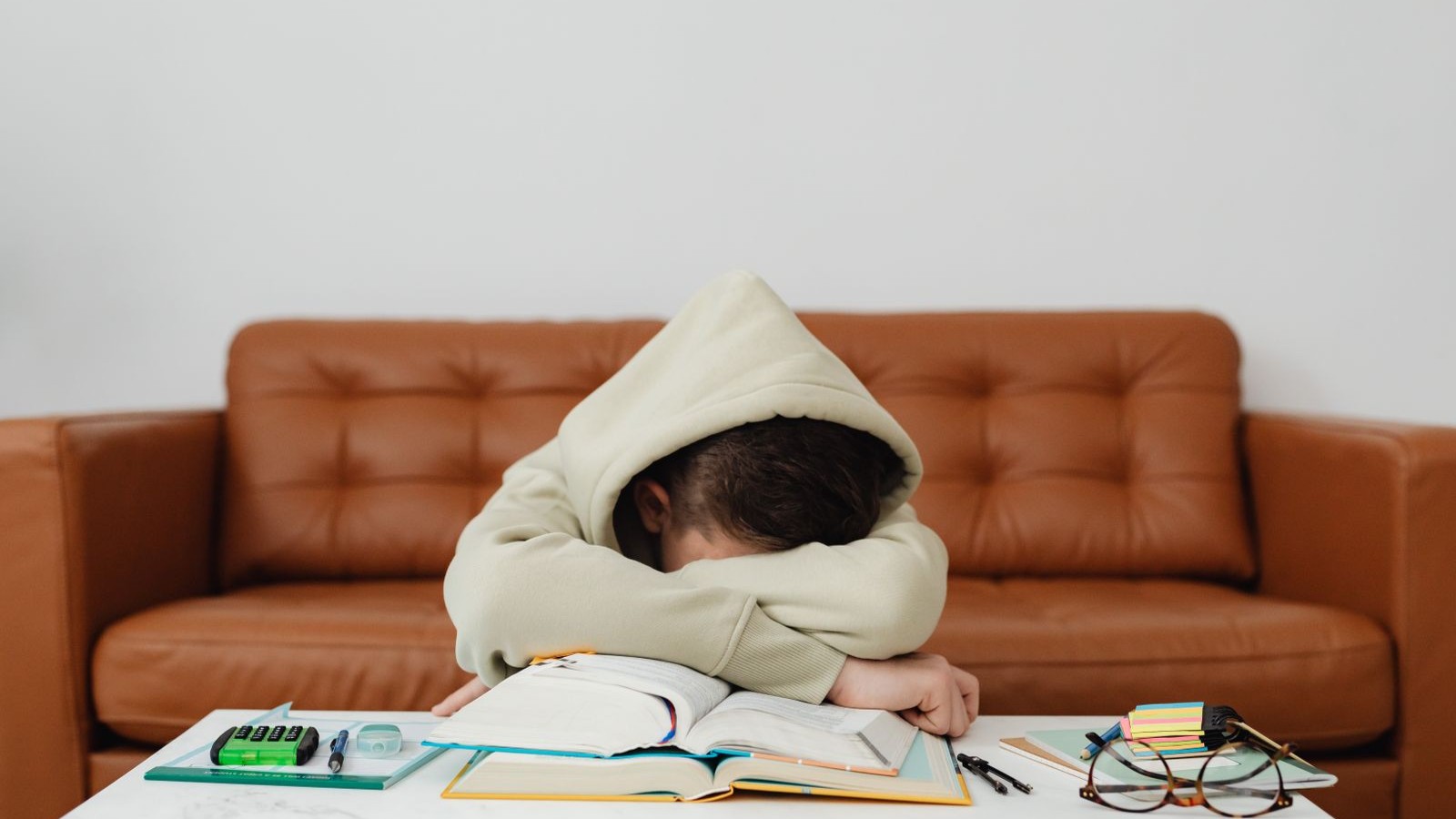
Ask a family who stopped why they stopped, and the answer is almost never that the Japanese school was bad. It is that a week came along in which something had to go, and the Japanese thing went, and then the next week was the same, and after a month it was easier not to restart.
This is not a failure of will. It is structural, and the structure is worth naming because it is the thing you design against.
The local school has three forms of force that the Japanese side does not have. It is backed by law or at least by an institution with authority over your child’s day. It produces grades that carry consequences. And the other children are physically present, which means missing it has a social cost your child feels immediately. The Japanese side typically has none of the three: no legal force where you live, no grade anyone will ask about, and, if it is one-to-one, nobody who notices.
Anything with no force and no witnesses loses every contest it enters. So the whole design problem is to give the Japanese side one of the three. You cannot give it legal force and you should not try to give it grades that matter, because a second source of academic pressure is exactly what makes children refuse. What you can give it is witnesses.
The design rule: put people on the Japanese side, not homework
The version of double-schooling that survives has a person in it whom the child does not want to let down, and preferably several who are the child’s own age.
Concretely, that means a few things.
Prefer a small class to a private lesson, even if the teaching is slightly less targeted. A private lesson has a teacher; a small class has a group of peers and a teacher. Only one of those creates the feeling of being expected. If you want the longer argument about what online classes can and cannot do socially, we have written about whether children make friends at online school separately.
Make the commitment to the people, not to the hours. “We do Japanese on Tuesdays with Ms X and the others” survives a hard week. “We do two hours of Japanese a week” does not, because two hours is fungible and can always be moved to next week.
Keep home practice small and non-negotiable rather than large and aspirational. Ten minutes that happens is worth more than forty that is attempted on Sunday. The purpose of home practice in a double-schooling family is not volume; it is to keep the child from arriving at class unable to participate, which is the thing that actually ends attendance.
Never let the Japanese side become a second homework source. The moment the Japanese school starts generating work that competes with the local school’s work in your child’s head, you have created the conflict that ends the arrangement. A Japanese programme that assigns a lot is not being rigorous; it is being unaware of what else is in your child’s week.
Four shapes of double-schooling, compared
Families end up in one of four shapes. They cost different amounts of the child’s week and they protect different things.
| Saturday supplementary school | One-to-one private tutoring | Self-directed home study | Small online classes with other children | |
|---|---|---|---|---|
| Protects spoken fluency | Yes | With one adult | No | Yes |
| Carries the kanji load on its own | Partly, with heavy homework | Partly | Only with daily discipline | No — it supervises home practice, it does not replace it |
| Gives the child other children | Yes, in person | None | None | Yes, on screen |
| Works where you live | Only near a city with one | Anywhere | Anywhere | Anywhere, if the time zone allows |
| Cost in the child’s week | A whole weekend day plus homework | Low | Low but daily | Low |
| Survives a bad term without restarting from zero | Rarely | Sometimes | Rarely | Usually |
Legend: Yes = clearly available, partial entries marked as such, No = not available. General tendencies as at October 2026, not a guarantee about any particular school or provider. The second row applies to our own column as well: no weekly class, of any kind, carries the character load without daily practice at home.
The row that decides most families is the last one. A supplementary school that a child stops attending is very hard to restart, because returning means walking back into a room where everyone has moved on without you. A small online class is easier to rejoin, which matters more than it sounds, because almost every family has a bad term.
Somebody in the family has to own it
This is the least discussed variable and probably the strongest predictor of whether a double-schooling arrangement is still running in two years.
The local school runs itself. It sends emails, it sets deadlines, it tells you when the concert is, and if you forget something it reminds you. The Japanese side does none of that, or does it in a language and a time zone that makes it easy to miss. Which means every piece of friction in the arrangement — the timetable change, the login that stopped working, the book that needs ordering from Japan, the week off nobody announced in English — has to be absorbed by a named adult who has decided this is their job.
In families where that adult exists, the arrangement survives bad terms, because somebody is quietly carrying it. In families where both parents assume the other one is half-watching it, the arrangement ends at the first friction, and neither parent experiences the ending as a decision. It just stops being mentioned.
Two practical points follow. The first is that the owner does not have to be the Japanese-speaking parent, and in households where one parent speaks Japanese there is a specific trap: the Japanese side becomes that parent’s private project, which means it is also theirs to be disappointed about. The arrangement is more durable when the administrative ownership and the language itself sit with different people, because then the Japanese-speaking parent gets to be an ally rather than the enforcement mechanism.
The second is that the owner needs a decision right, not just a duty. Whoever carries it should be the person who gets to say “we are dropping to one class this term” without a family negotiation. An arrangement that can only be reduced by consensus will be abandoned instead of reduced, because abandonment requires no conversation.
What changes when your child turns twelve
Everything above assumes a primary-age child. The arithmetic changes at secondary age, in three directions at once, and families who do not notice end up fighting a battle whose terms have shifted.
The local load rises steeply and becomes consequential. Secondary homework is not primary homework, and in most systems the work your child does from around thirteen starts attaching to qualifications. The free hours in the week that you budgeted from in the first section shrink, and what is left has a claim on it that a Japanese programme cannot outrank.
The Japanese content gets harder faster than your hours grow. Elementary Japanese language allocations fall from nine hours a week to five by Year 6, but the material gets denser, and after elementary school the character load roughly doubles again. Two hours a week was a maintenance dose for a nine-year-old; for a fourteen-year-old working on secondary material it is closer to a holding pattern, and it should be described to the child that way rather than presented as progress.
The child acquires a veto, and will use it. At primary age an arrangement continues because the adults continue it. From about twelve it continues because the child consents, and consent is not won by explaining the long-term value of Japanese, which is an argument children correctly identify as being about the parents’ hopes. It is won, if at all, by the thing that is in the room: whether they like the people there.
Which brings the whole article back to the same place. At every age, the hours are too few to buy coverage, and the thing worth buying with them is other people. At twelve and above, that stops being the smart choice and becomes the only one that holds.
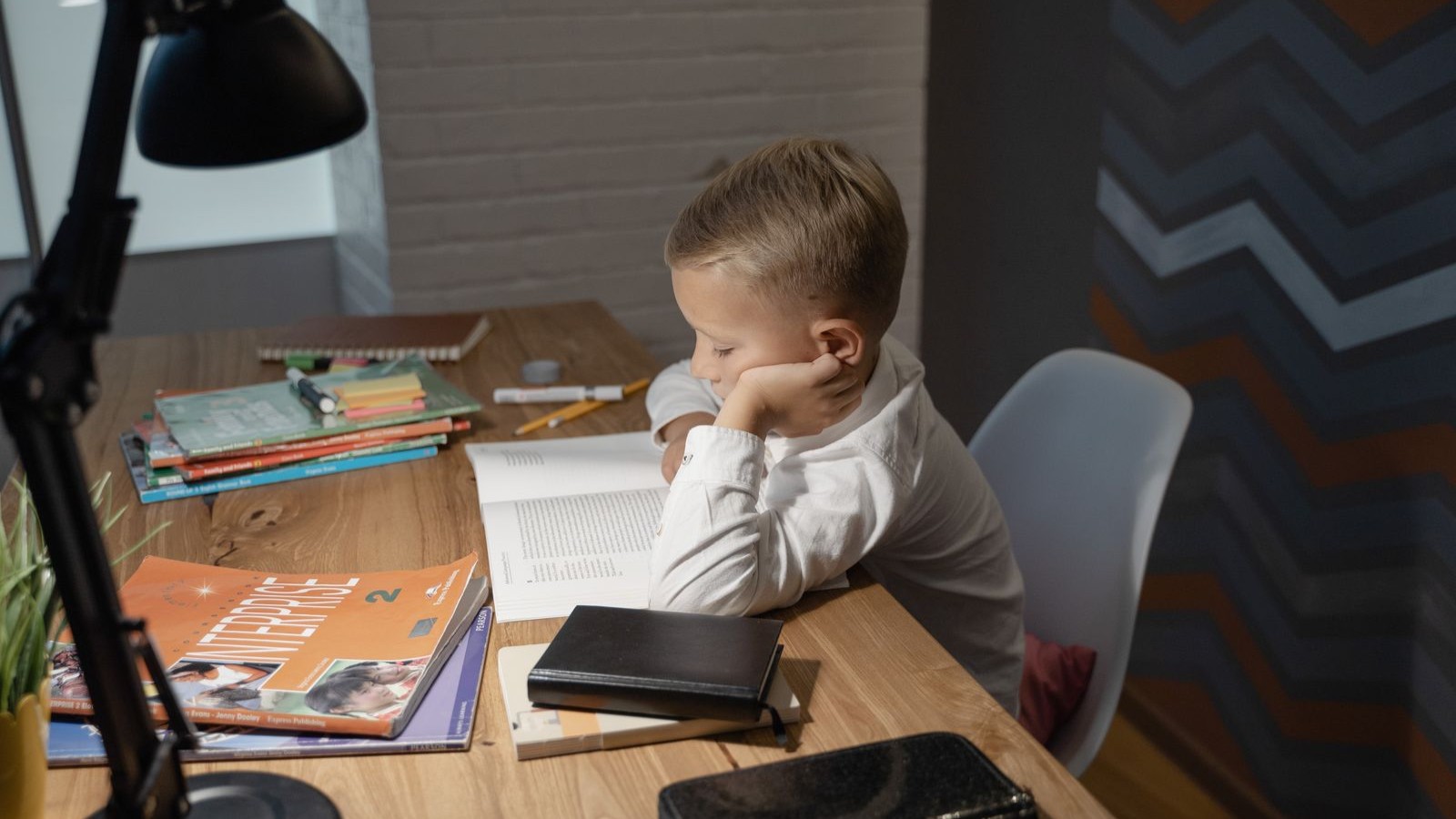
How many hours a week is honest?
There is no researched answer to this and anyone who gives you one is guessing. What there is, is a way to work out your own number that does not collapse in month four.
Write down the hours in your child’s week after local school, local homework, sleep and one thing they do for fun that is not negotiable. Whatever remains is the budget. It is usually much smaller than parents expect, and it is the real constraint.
If the budget is small, buy class time with other people rather than material to work through. Material with nobody attached to it is the first thing to stop, and once it stops there is nothing holding the week together.
A plan that uses every available hour fails on the first week that goes wrong. A plan with slack absorbs a bad week and continues. The families still doing this after two years are, almost without exception, the ones who deliberately underbought.
If you want a starting shape rather than a number: one class a week with other children, plus ten to fifteen minutes on most days at home, is a load that a child with a full local school day can carry for years. Two classes plus daily work is sustainable for some children in some years and is the point at which you should be watching for the signs in the next section.
The term when you should deliberately stop
Stopping is a legitimate move and the article would be dishonest without this section.
There are terms in which adding anything is a mistake: the term your child changes school, the term you move country, the term an examination series runs, and any term in which your child has started finding the local school hard. In that last case especially, a second school is not a neutral addition. A child who is struggling to get through the door at their main school does not have spare capacity for a second one, and parents who add Japanese at exactly that moment usually do it out of a feeling that something must be done.
If school refusal is what is actually happening, that is a different problem with a different shape, and it is worth reading about school refusal at an international school abroad rather than treating it as a scheduling question.
When you do stop, stop explicitly and with a date to reconsider. “We are pausing Japanese until September” keeps the thing alive as a plan. Drifting out of it teaches the child that the Japanese side is the part of life that quietly disappears, which is a lesson that outlasts the term.
One thing worth protecting even in a stop term. If everything else goes, keep whatever contact your child has with Japanese-speaking children, even if it is a single call with cousins. Teaching can be rebuilt from books at any point. The willingness to open your mouth in Japanese in front of other people is the thing that does not come back on its own, and it is also the thing that costs the fewest hours to keep.
What to ask the Japanese side before you commit
- How many other children are in the room, and are they the same children each week? Six familiar faces is a different product from twelve rotating ones, and only the first produces the feeling of being expected.
- What is assigned between classes, in minutes? Ask for a number, not a philosophy. If the answer is over twenty minutes a day for a child who also attends a full local school, the programme has not understood your situation.
- What happens when we miss three weeks? Every overseas family misses three weeks — travel, illness, exams. The answer tells you whether rejoining is easy or humiliating.
- What times do you run, in Japan time, and which of them exist on Saturdays? Work this out against your own offset before you fall in love with a provider. The time zone decides more than the curriculum does.
- Is the child placed by age or by reading level, and can they move? A child between two school calendars will not fit cleanly, and a programme that cannot move them mid-year will either bore them or lose them.
- What does the programme claim about Japanese schooling status? Anything that implies attendance days, a school roll, or an automatic entrance qualification should be checked against the sections above before you believe it.
What we could not establish
We could not find any research on how long overseas families sustain a Japanese programme alongside a local school, what proportion stop, or what distinguishes those who continue. The impressions in this article about why families stop are ours and are offered as such, not as findings.
We could not find any published measure of how many hours a week of Japanese instruction maintain a given capability for a child living abroad. There is no honest number, and the numbers quoted in marketing material are not derived from anything we could trace. We have given a starting shape and said plainly that it is a shape rather than evidence.
And we could not establish anything general about providers’ timetables. The time-zone table above is arithmetic from fixed offsets, not a survey of what is actually offered; check real timetables against real dates.
Frequently asked questions
Sources used for this article
- Standard class hours for elementary school, Schedule 1 to the Enforcement Regulation of the School Education Act, as published by the Ministry of Education, Culture, Sports, Science and Technology: 850 / 910 / 980 / 1,015 / 1,015 / 1,015 hours across the six years, of which Japanese language takes 306 / 315 / 245 / 245 / 175 / 175. Checked 7 October 2026.
- Ministry of Education, Culture, Sports, Science and Technology, commentary on the elementary school curriculum guidelines, Japanese language, for the assignment of characters by year: 80 / 160 / 200 / 202 / 193 / 191, totalling 1,026. The list of characters in general use, published by the Agency for Cultural Affairs, contains 2,136. Checked 7 October 2026.
- Embassy of Japan in the United States, “Education System in Japan”, which states that the Japanese school year typically begins in April and ends in March, and that compulsory education runs for nine years. Checked 7 October 2026.
- Ministry of Education, Culture, Sports, Science and Technology, 就学事務Q&A item 6, for the handling of the school-age register when a child moves abroad and for the list of high school entrance qualifications referred to in this article. Checked 7 October 2026.
Japan standard time is UTC+9 and does not change for summer time; the local times in the time-zone figure are our own arithmetic from the offsets shown and are illustrative. Where this article describes what tends to happen in families, that is our observation and is marked as such, not research.
NIJIN GLOBAL ACADEMY is an online school for children growing up outside Japan. It is built around small classes rather than one-to-one lessons, so the Japanese hours in your child’s week are hours with other children — the one thing that makes a second school survive a hard term.
Published: 7 October 2026 / Last updated: 7 October 2026