Menu
BASICS
How Japanese schools work Japanese phrases for school Glossary of school termsWAYS TO LEARN
Free schools Education support centers Online schools Homeschooling in Japan International schools Correspondence high schoolsMORE
Neurodivergent children Where to get help Attendance and costs Learning Place Finder 日本語サイトへWhen Your Child Can’t Talk to Their Japanese Grandparents: Closing the Gap Before It Sets
- Why the usual grandparent call fails, in five specific ways
- What the research found about families who lose the home language — with figures
- Why a grandparent is the single best language partner most families already have, and never use properly
- How to design a call that produces real conversation, step by step
- A short section you can forward to the grandparents themselves
- What to do when the grandparent is unwell, shy, or hard of hearing
- When your child refuses to call at all
The short version
A Japanese grandparent who speaks no English is, on paper, the perfect language partner for a child abroad. They are motivated, patient, available, free, and — crucially — they cannot switch to English. That last property is the one thing a parent can never offer, because your child knows perfectly well that you understand them either way.
And yet in most families this relationship produces almost no language at all. The reason is not distance or time zones. It is that the standard grandparent call is built like a performance: the child is brought to the screen, asked a series of questions, praised for one-word answers, and interpreted for by a parent standing behind them. Nothing about that resembles a conversation, and children who are shy about their Japanese learn within three calls that the safest strategy is to say as little as possible.
Almost everything in this guide comes down to one change: stop staging a performance and give your child and their grandparent something to do together. The language follows the activity. It almost never follows the question “so, how is school?”
What is actually at stake
It helps to name this precisely, because “keep up their Japanese” is too abstract to motivate anybody and it is not really what parents are worried about.
What is at stake is whether your child will ever have a relationship with these people that belongs to them — one that is not mediated by you. There is an enormous difference between a child who knows their grandmother and a child who is polite to their grandmother for fifteen minutes while a parent interprets. The second child, at twenty-five, will remember a kind person they could not talk to. The first will remember a person.
There is also a second loss, which is the grandparents’. They almost never mention it. Japanese grandparents in this situation tend to say “仿方ないね” and change the subject, and that silence is routinely misread by parents as acceptance. It is usually politeness.
And there is a third, which is yours. Lily Wong Fillmore’s work on language-minority families in the United States — around a thousand families, 690 in the main sample and 311 in a comparison group — looked at what happened when children were schooled in English only. As reported at the time, about 51% of parents in the main sample said their home language was being displaced by English, against just over 10% in the comparison group whose children were in primary-language programmes, and around 12% said their children now spoke the home language poorly or not at all, against 1.6%.
Her point, which is the reason that paper is still cited more than thirty years later, was not about vocabulary scores. It was that when the home language goes, families lose the ability to discuss anything complicated — advice, values, worry, humour, the things grandparents are actually for. The conversation does not get shorter. It gets shallower.
Why the standard call fails
Almost every family runs the same call, and it has five design faults. None of them are anybody’s fault; they are just what happens when two people who love each other are nervous.
Five reasons it produces no language
| What happens | Why it kills the conversation | What to do instead |
|---|---|---|
| A parent stands behind the child and interprets | Removes all need to produce Japanese. The child has a faster route to being understood, and takes it — correctly. | Leave the room. Be reachable, not present. |
| The grandparent asks a series of questions | Turns the call into an oral exam the child is failing. Questions demand retrieval under pressure, which is the hardest possible mode. | Give them a shared task instead of a topic. |
| One-word answers are praised extravagantly | Signals that the bar is low because the child is an outsider. Older children find this humiliating and withdraw. | Respond to content, not to performance. |
| The call happens when a parent remembers | Irregular contact never becomes a habit, and every call restarts from cold. | Same day, same time, every week. Boring is the point. |
| It is framed as a duty | “Go and say hello to Grandma” places the call in the same category as tidying up. | Give the child a reason: something they want, or something the grandparent needs. |
Patterns reported consistently by families abroad. If your call has three of these five, it is not a relationship problem — it is a format problem.
The interpreting one is worth sitting with, because it is done out of kindness and it is the most damaging. When you interpret, you are solving the problem the call exists to create. Every time you supply the sentence, you remove the two seconds of struggle in which your child would have found a worse, slower, entirely sufficient way to say it themselves. Those two seconds are the whole product.
Why a grandparent is the best language partner you are not using
Put the options side by side and the case is obvious.
| Who the child speaks Japanese with | Can switch to English? | Patient with errors? | Honest verdict |
|---|---|---|---|
| The Japanese parent | Yes | ○ | Essential for comprehension. Creates no need to speak, because the child knows you understand. |
| A paid tutor | Usually | ○ | Good for literacy and exams. Accommodates the child so skilfully that the child never has to finish a sentence. |
| Apps and media | — | — | Input only. Nobody is waiting for an answer. |
| A grandparent with no English | No | ○ | Cannot switch, infinitely patient, emotionally motivated, free, and already in your family. The best unused asset most of these households have. |
| Japanese-speaking peers | No | △ | The strongest driver of fluency, because children are not patient — but hardest to arrange from abroad. |
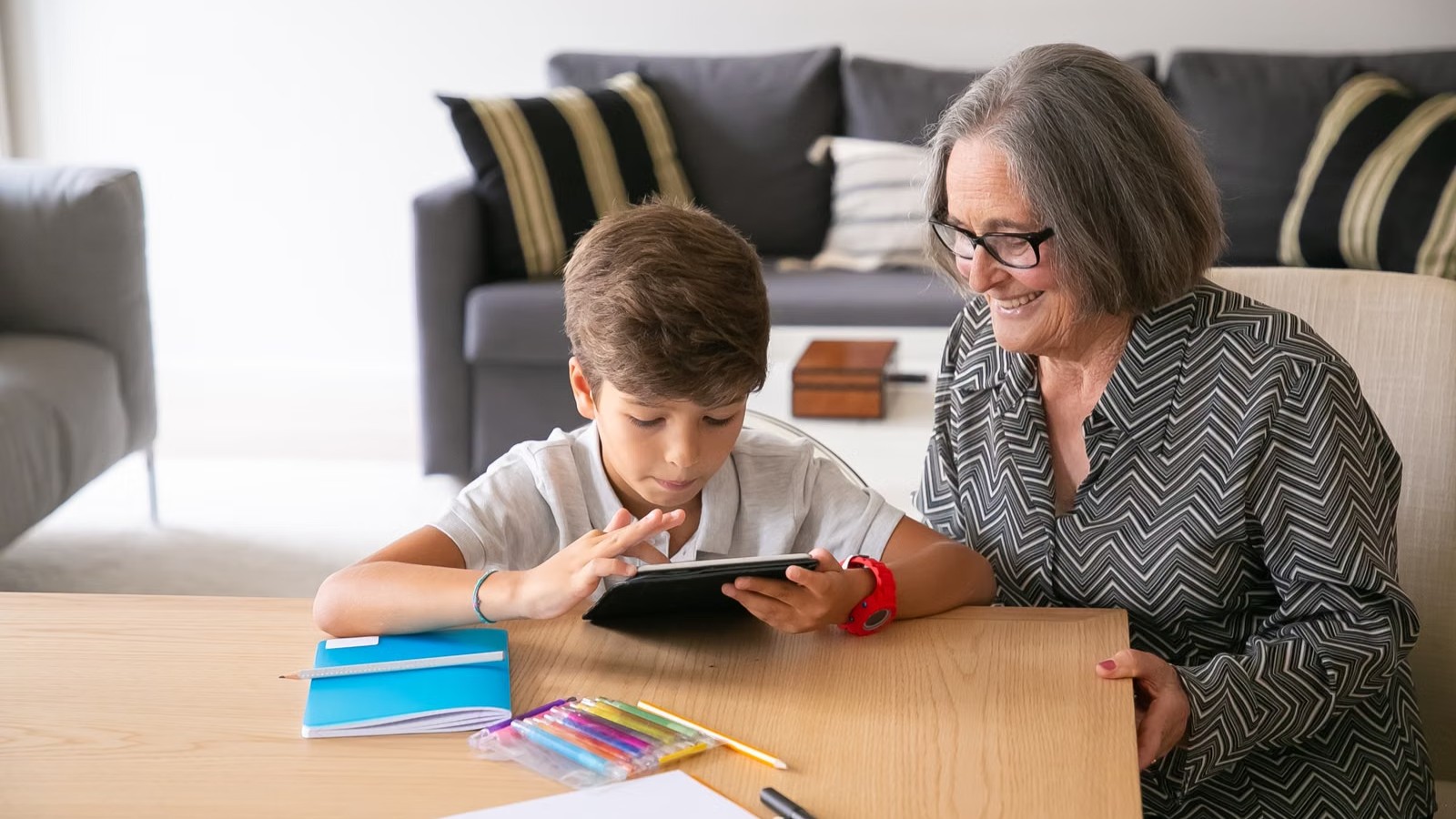
Grandparents sit in a sweet spot that nothing else occupies. Peers produce the fastest gains because they will not wait — but they are hard to find, and for a child who is embarrassed about their Japanese, peers can be frightening. A grandparent is the opposite: completely safe, completely patient, and still structurally unable to let the child off the hook. For a child in the self-conscious years, that combination is often the only door that is open.
There is one more thing grandparents have that no school can manufacture. They have stories the child cannot get anywhere else — what their parent was like at that age, what the town used to look like, a war, a job, a disaster, a love affair. Children will work surprisingly hard in a second language for information they genuinely want and cannot obtain any other way.
How to design a call that actually works
This is the practical core of the guide. Change these six things and most families see a difference within a month.
Fifteen minutes, same day, same time, every week — or twice a week if the time zones allow. Long irregular calls do far less than short predictable ones, because the value is in the habit, not the duration. Put it in the calendar as an appointment that other things are moved around, not as something you do when there is a gap.
The hardest one. Set the call up, say hello, and then go and do something else within earshot. If you stay, you will interpret — everybody does — and the call will stay at the level your interpreting allows. Expect the first two calls without you to be awkward and short. That awkwardness is the work.
“How was school?” is an exam question. “Show おばあちゃん your Lego and tell her which bit is hardest” is a task. Cooking the same thing simultaneously, a card game over the camera, reading the same picture book, a drawing competition, a tour of the garden, feeding the pet — all of these produce ten times the language of a question-and-answer call.
Whoever holds the phone runs the call. If a parent holds it, the child is a guest at their own conversation. Hand it over, including the right to end the call — a child who can leave usually stays longer.
This is the single most common reason children stop wanting to call. See the next section; it is worth forwarding.
Stop while it is still going well, even at seven minutes. The feeling the child is left with determines whether next week is a battle. A short good call beats a long one that went flat.
A note you can forward to the grandparents
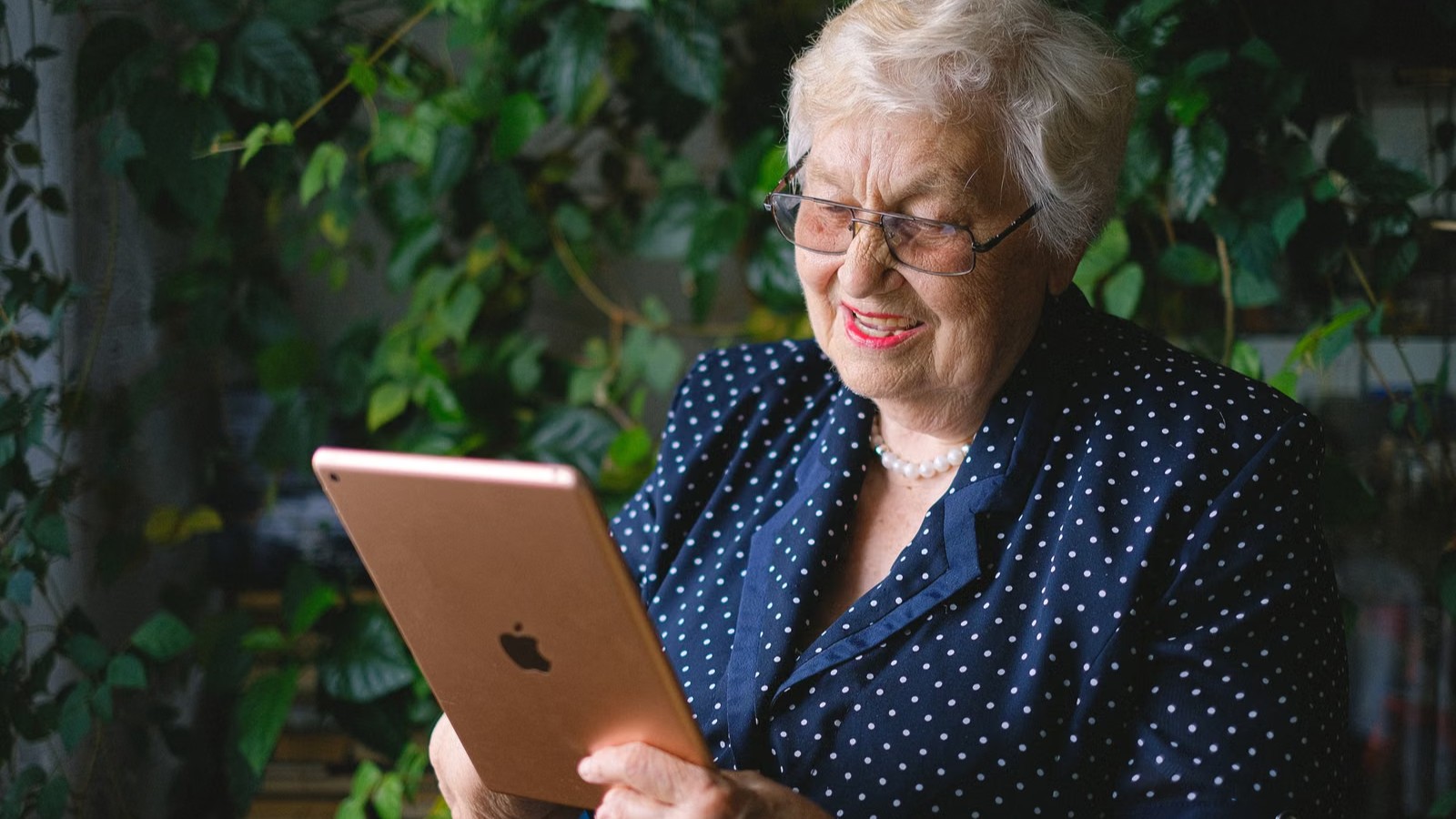
Grandparents almost always want to help and are rarely told how. Most of the damage in these calls is done by two things done out of pure love: correcting, and praising too much. If it is useful, send them this.
Six things that help, and three that do not
| Please do | Please don’t |
|---|---|
| Talk about yourself. Tell them what you did today, what you ate, what the weather is doing. Children answer questions badly and respond to stories well. | Correct their Japanese. Not even gently, not even once. Say the right form inside your own next sentence instead. |
| Ask for help with something real. “Which of these two should I buy?” “What is this on my phone?” A child who is useful keeps talking. | Praise a single word as if it were remarkable. Older children hear this as “we expected nothing from you”. |
| Accept any answer, including a wrong one. Reply to what they meant. Meaning first, always. | Compare them to cousins in Japan. Even favourably. Especially favourably. |
| Be boring and regular. The same time every week matters more than anything interesting. | |
| Show things. The garden, the cat, what you are cooking, an old photograph. Visuals carry a conversation that words alone cannot. | |
| Let silences happen. Count to five before filling one. The sentence is usually still coming. |
Most grandparents are enormously relieved to be given instructions. Being told “just talk to them normally” is much harder than being told exactly what helps.
One addition for the Japanese parent, which is harder to say to your own mother or father: if a grandparent persistently tests, corrects, or compares, you will have to ask them to stop, and it is worth the awkward conversation. Children vote with their feet, and a child who associates the weekly call with being assessed will find reasons to be busy within a month.
When the grandparent is unwell, shy, or hard of hearing
The advice above assumes a grandparent who is well and willing. Often they are not, and the call needs redesigning rather than abandoning.
Common obstacles, and what tends to work
| Situation | What usually happens | What works better |
|---|---|---|
| Hard of hearing | The call becomes a series of “え?” and both sides give up. | Move to activities that do not depend on hearing: drawing on screen, showing objects, writing in large characters, a messaging thread with voice notes the grandparent can replay. |
| Unwell or easily tired | Calls get cancelled, then stop entirely. | Five minutes, three times a week, beats thirty minutes once. Lower the bar until it is impossible to miss. |
| Uncomfortable with technology | The call depends on another adult in Japan being free, so it happens rarely. | Set up a device that is permanently on and does one thing. Pre-dial. Remove every step you can. |
| Shy with children, or formal | Both sides wait for the other to start, then a parent rescues it. | Give the grandparent a script for the first minute and a job for the rest. Most shy grandparents are fine once they have a task. |
| Grandparent speaks a strong dialect | The child understands little and concludes their Japanese is bad. | Say explicitly that this is a different Japanese, not harder Japanese, and that even people in Tokyo would struggle. Children handle difficulty well and humiliation badly. |
The principle underneath all five: reduce the requirements until the call is easy enough to happen every week, then build back up.
One more, which families rarely plan for and almost always regret not planning for: the window is not open indefinitely. We are not going to use that to pressure you, because guilt is a poor motivator and most parents reading this are already carrying enough of it. But it is a fact worth holding in view when the weekly call feels like one more thing. The cost of starting this year is twenty minutes a week. The cost of starting later is sometimes that it cannot be started at all.
Visits: the two weeks that do most of the work
A fortnight in Japan with grandparents can be worth more than a year of calls — or almost nothing. The difference is whether the child is left alone with them.
The usual trip has a bilingual parent present at every moment, interpreting out of habit, and the child spends two weeks being talked about in the third person. The useful trip has, somewhere in it, a few days or even a few afternoons where the child and the grandparent have to manage without you.
- Overnight or a full day without the bilingual parent. Nothing else on this list comes close. Two days alone with grandparents does more than two weeks of supervised family time.
- A job they do together, daily. Watering something, walking somewhere, preparing a meal, a shop they go to. Repetition builds vocabulary the child actually uses.
- An errand the child does alone. Buying bread. It is twelve words and it is worth a month of lessons.
- Something to continue afterwards. A plant, a story, a game, a running joke — so that the next video call has a subject that is already theirs.
- Photographs taken by the child, to be discussed on calls later. It converts the visit into call material for months.
And the same rule as always: when a grandparent asks your child a question, do not answer it. Count to five. It will feel rude to everybody in the room and it is the only way the child ever starts.
When your child refuses to call
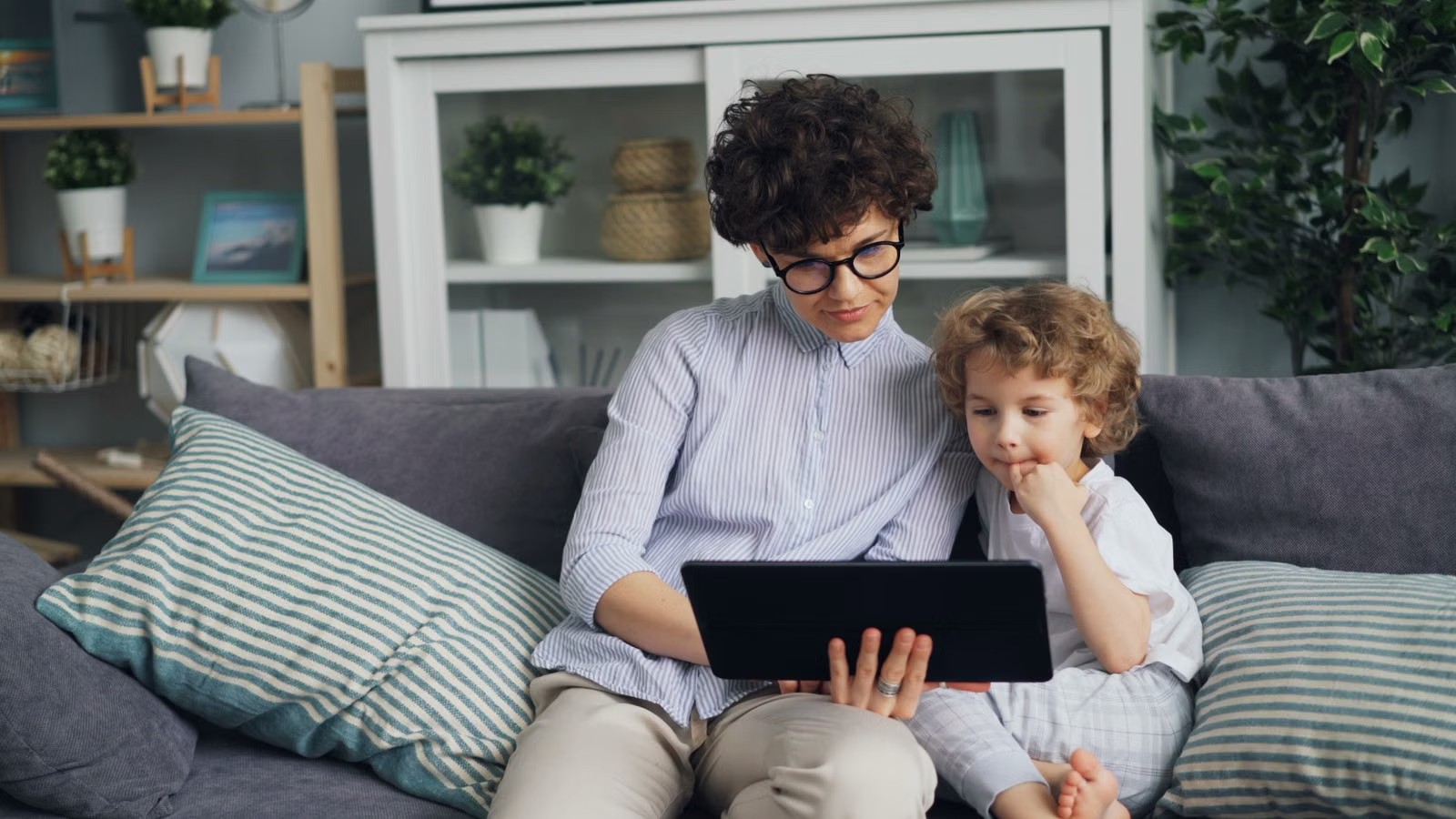
At some point, usually between eight and twelve, many children start resisting. They are busy, they are shy, they say it is boring. Taken at face value this looks like rejection of the grandparent, and parents often respond with pressure, which reliably makes it permanent.
It is almost never about the grandparent. The three real reasons, in order of frequency:
They are embarrassed. The call exposes the gap between what they can think and what they can say, in front of someone whose opinion matters enormously. Avoidance is a sensible response to predictable humiliation. The fix is not encouragement; it is lowering what the call demands — an activity instead of questions, five minutes instead of twenty, a sibling alongside them for the first few.
They have no role. A child who is brought to the screen to be looked at has nothing to do. A child who is showing someone something, teaching them something, or helping them decide something has a job, and children with jobs do not get bored.
It is scheduled badly. Japanese evening is often a child’s morning or their one free hour. A call that costs them something they wanted will always be resisted, and the resistance will be interpreted as being about the language.
If your child has gone silent across settings rather than specifically on these calls — at school, with friends, in both languages — that is a different question, and our guide to selective mutism in a bilingual child covers how to tell the two apart.
What it costs if nothing changes
Beyond the relationship itself, there is a practical cost that arrives later and is easy to miss while the children are small.
If your family ever moves to Japan, the Japanese government’s own figures describe what happens to children who arrive without usable Japanese. As of 1 May 2025, 84,759 children in Japanese public schools needed Japanese-language instruction, and 11,446 of them were Japanese nationals — overwhelmingly children who grew up overseas and came back. Among students needing that instruction, the rate of going on to upper secondary education was 91.5% against 98.9% for students overall, and the rate of going on to university and similar institutions was 41.2% against 75.0%.
A child who has spent four years talking to their grandmother every week does not arrive in that category. The weekly call is not only sentimental; it is the cheapest insurance available against a problem that is extremely expensive to fix at fifteen.
If a move is realistic for you, our guides on Japanese public elementary school for foreign children and returnee children struggling after arrival cover what happens next. If your child understands Japanese but will not speak it, the core guide to that pattern is the place to start, and if only one parent in your household speaks Japanese, the guide for that configuration goes into it properly.
Twenty things to do on a call that are not “how was school?”
The hardest part for most families is not the principle but the blank screen on a Sunday morning. Here is a bank to work through. Pick one, do it for three weeks, then change.
Activities that produce language, grouped by what the child can handle
| Age | What to do together |
|---|---|
| 3–6 | Read the same picture book, each holding a copy. Show toys one at a time and name them. Grandparent hides something and the child guesses. Sing the same song badly. “Tour” the room with the camera. Feed the pet on screen. Count things together. |
| 7–9 | Cook the same simple thing simultaneously. A drawing competition with the same subject. A card game held up to the camera. The child teaches the grandparent a game from school. Show-and-tell of one object a week. A shared “what did you eat today” photo thread between calls. |
| 10–13 | The child helps with a real decision — which of two things to buy, what a screen on a phone says. A continuing story told one instalment a week. Looking at old photographs and asking who everyone is. Watching the same series separately and comparing. Planning a trip together on a map. |
| 14+ | Interview them properly — about their school days, their work, the town, a historical event they lived through. Teach each other something. Talk about a shared interest: baseball, food, a drama, music. Help them with technology, which flips the expertise and is enormously good for a teenager. |
All twenty share one feature: the child has something to do other than be assessed on their Japanese.
Two of these are worth singling out because families report them working far beyond expectation.
The photo thread between calls. A simple message thread where the child sends one photo a day of something ordinary — lunch, the dog, the weather — and the grandparent replies. It takes ten seconds, it requires almost no Japanese to start, and it turns a weekly event into a continuous relationship. Many families find the calls improve dramatically once the pair already has an ongoing conversation to continue.
The teenager interviewing a grandparent. Give a fourteen-year-old a real assignment — find out what their grandmother’s childhood was like, write it down, keep it — and something changes. They stop being a child performing their Japanese and become a person collecting something that matters. Families who have done this almost always say the same thing afterwards: that it became about the grandparent rather than about the language, which is precisely why it worked.
What to say when a call goes badly
Some calls are eight minutes of silence, and what happens in the five minutes afterwards decides whether there is a call next week.
| The moment | What usually gets said | What works better, and why |
|---|---|---|
| The child said almost nothing | “You could have talked a bit more.” | “That was nice, same time next week.” Nothing else. Any review turns the call into a performance with notes afterwards. |
| The child says it was boring | “Grandma was so happy to see you.” | “Fair enough — what would make it better?” Then actually change it. Boredom is usually a format complaint, and it is accurate. |
| The child could not find a word | “We should practise that.” | Supply the word later, in passing, in a different context. Attaching homework to the call is how calls die. |
| The grandparent corrected something | Letting it pass to avoid awkwardness | Speak to the grandparent, not the child, before the next call. One sentence, framed as what helps the child talk. |
| The child asks to skip a week | “No, we do this every Sunday.” | Let them skip it, cheerfully, and keep the next one. A missed call costs you nothing; a call that becomes a fight costs you the habit. |
| The call was genuinely good | “See? Your Japanese is getting better!” | Say nothing about the Japanese. Mention something they talked about. Praising the language reminds them it was a test. |
The thread through all six is that the call should never have a verdict attached to it. The moment a child senses that someone is grading the conversation — even approvingly — it stops being a relationship and becomes an assessment, and children manage assessments by doing less.
What a grandparent cannot do
Honesty about the limits, because a weekly call will not on its own produce a fluent child, and families who expect it to end up disappointed in something that was working.
What the grandparent call gives you, and what it does not
| What it does well | What it will not do |
|---|---|
| Keeps comprehension alive. The single most valuable thing, because comprehension is what everything else is rebuilt from. | Build speed. Grandparents wait. Peers do not, and real-time fluency comes from people who will not wait. |
| Gives Japanese a person. A language attached to someone a child loves survives the years when it is attached to nothing else. | Teach reading and writing. That needs a hoshuko, a tutor, or a school. |
| Produces real speech, safely. For a self-conscious child this is often the only setting where speaking is survivable. | Supply age-appropriate vocabulary. Your child will learn their grandmother’s Japanese, not a ten-year-old’s. Both matter. |
| Costs nothing and needs no commute. | Give them friends. A child who can talk to adults but not to other children still avoids Japanese in the settings that matter to them. |
The two columns are complementary, not competing. Families who do best usually have the grandparent call and something with peers.
That last row is the one that decides what else you need. Children are a different kind of language partner from adults: faster, less forgiving, much funnier, and completely uninterested in making allowances. A child who only ever speaks Japanese to patient adults develops a particular profile — polite, slow, oddly formal, visibly uncomfortable around Japanese children their own age. The grandparent call is the foundation. It is rarely the whole building.
Where an online Japanese school fits — and where it does not
The gap the grandparent call leaves is peers, and peers are the hard thing to find from abroad.
TOMODACHI JAPAN (ともだちじゃぱん) is an online Japanese school built by NIJIN for children growing up abroad, and it is aimed at exactly that gap:
- Children in Japan are in the classes, through NIJIN’s sister school NIJIN Academy (over 1,000 students enrolled to date) — peers who genuinely do not have the English, and who will not wait.
- Classes of eight, grouped by what a child can currently say rather than by age or school year — so a child whose Japanese came mostly from their grandmother is placed where they can actually talk.
- Conversation and projects rather than grammar drills, starting from what the child is interested in.
- Reading, writing and kokugo alongside, for the part a grandparent cannot cover.
- No commute, time zones accounted for, daily or weekends and after-school only.
A grandparent keeps Japanese alive and safe. Children their own age are what make it fast. TOMODACHI JAPAN is an online Japanese school with classes of eight, grouped by what a child can actually say, alongside peers in Japan who do not speak English. The pilot opens in December 2026.
Who this is not right for
- If the grandparents speak English comfortably. Then the structural advantage — being unable to switch — is gone, and the call will drift into English. Lovely for the relationship; not a language plan.
- If your child’s Japanese is already strong. Keep the calls, and spend your effort on reading and writing instead.
- If the family relationship is strained. Do not use a child as the repair mechanism. Fix what needs fixing between the adults first.
- If your child needs an exam — GCSE, HSC, VCE, AP Japanese — use a specialist tutor for that.
- If you need something this month. TOMODACHI JAPAN does not open until December 2026.
A 60-day plan
Pick a fixed slot — same day, same time, fifteen minutes — and protect it. Send the grandparents the list above. Agree with them, explicitly, that nobody corrects anything. Do not change anything else yet.
Set the call up and go. Expect short, awkward calls for the first two or three weeks; this is the period most families abandon, and it is the period that matters. Give the pair a task each week — something shown, made, chosen or decided — so neither of them has to think of a topic.
Keep the call and add children. A local Japanese family, a group class, a trial at an online school. The grandparent gives your child a safe place to speak Japanese; other children give them a fast one. Most families need both.
One last thought, for the week when the call is eight minutes of silence and you wonder whether any of it is working. Your child is not learning Japanese on those calls so much as learning that Japanese is how you talk to someone you love. That is the thing that survives the years when nothing else does — and it is the thing that brings children back to the language at seventeen, when they suddenly want to read a letter, or go on their own, or say something that cannot be said in English.
Frequently asked questions
Sources used for this article
- Wong Fillmore, L. (1991), “When learning a second language means losing the first”, Early Childhood Research Quarterly 6, 323–346: doi.org/10.1016/S0885-2006(05)80059-6. Sample sizes and percentages as reported in Education Week, May 1991: edweek.org
- De Houwer, A. (2007), “Parental language input patterns and children’s bilingual use”, Applied Psycholinguistics 28(3) — survey of 1,899 families: doi.org/10.1017/S0142716407070221
- Colorín Colorado, “What are BICS and CALP?”, summarising Cummins and Collier & Thomas (1995) on time to conversational versus academic proficiency: colorincolorado.org
- MEXT, survey of the acceptance of children requiring Japanese-language instruction, figures as of 1 May 2025 (published June 2026): mext.go.jp (PDF)
- MEXT, overview of Japanese educational institutions overseas — 94 Japanese schools and 242 supplementary schools worldwide, as of 2024: mext.go.jp
- Ministry of Foreign Affairs of Japan, Annual Report of Statistics on Japanese Nationals Overseas, as of 1 October 2025: mofa.go.jp
- TOMODACHI JAPAN official website — class size, grouping, schedule and opening dates: tomodachi-japan.nijin.co.jp
A weekly call keeps your child’s Japanese alive and gives it a person. What it cannot give them is speed, or friends their own age. TOMODACHI JAPAN puts children abroad in classes of eight with peers in Japan who do not speak English, grouped by what each child can actually say. The pilot opens in December 2026 and the school guide is free.
Published: 5 October 2026 / Last updated: 5 October 2026