Menu
BASICS
How Japanese schools work Japanese phrases for school Glossary of school termsWAYS TO LEARN
Free schools Education support centers Online schools Homeschooling in Japan International schools Correspondence high schoolsMORE
Neurodivergent children Where to get help Attendance and costs Learning Place Finder 日本語サイトへYour Child Understands Japanese but Won’t Speak It: What Is Happening, and What Brings It Back
- What “understands but won’t speak” actually is, and why it is a stage rather than a verdict
- The three forces that quietly switch a child’s Japanese off
- What a study of 1,899 bilingual families found about who keeps the home language
- The four turning points where Japanese usually drops — and how fast
- What does not work, including the things most parents try first
- The one condition that reliably restarts speech, and how much time it takes per week
- What it costs later if nothing changes, including for families who return to Japan
- A realistic 90-day plan, and an honest look at where an online Japanese school fits
The short version
A child who understands Japanese but will not speak it is not being lazy, rude, or ungrateful, and has not “lost” the language. They are a receptive bilingual: the comprehension system is built and working, and the production system has gone quiet because it is not being used. Production is the expensive half of a language. It is slower to build, faster to fade, and it only grows under one specific pressure — needing to be understood by somebody who cannot switch.
That last point is the whole of this guide. Children do not learn to speak a language because it is good for them, because a parent asks, or because an app rewards them. They learn to speak it because somebody they care about is waiting for an answer and does not understand the other language. A parent who is fluent in both cannot create that pressure, however disciplined they are, because the child knows the parent understands. This is not a failure of parenting. It is a structural feature of the situation.
“Passive bilingual” is a stage, not a diagnosis
Linguists describe this as receptive or passive bilingualism: a person understands a language well but produces little or none of it. It is extremely common in children growing up abroad, and it is reversible far more often than parents fear — because nothing has been deleted.
Think of the two halves separately. Comprehension is pattern recognition: your child hears Japanese every day from you, and the system that decodes it stays maintained almost for free. Production is retrieval plus assembly plus the social nerve to be imperfect in front of someone. It requires the word to come back within about a second, the particle to be chosen, the ending to be conjugated, and the child to be willing to risk sounding younger than they are. When the only available listener is a parent who will understand the English version perfectly, the cost-benefit of all that effort collapses. The child is not refusing the language. They are taking the cheaper route, exactly as adults do.
This matters for how you respond, because it changes the problem from “my child cannot” to “my child currently has no reason to”. The first invites drilling. The second invites redesigning the situation — which is the thing that actually works.
Why comprehension survives and speech does not
Both halves are built from the same input, but they decay at completely different rates once the child starts school in another language.
| Comprehension (listening, reading) | Production (speaking, writing) | |
|---|---|---|
| What keeps it alive | Being exposed to it — a parent talking, a video playing | Being required to use it with someone who cannot switch |
| Effort for the child | Low. Can be done while doing something else | High. Real-time retrieval under social pressure |
| Visible to the parent? | Yes — the child clearly understands, which is reassuring | Easy to miss, because the parent keeps understanding the replies |
| What happens at school entry | Usually holds, if the parent keeps speaking Japanese | Drops first and drops fastest |
| How quickly it comes back | Rarely needs to — it was never gone | Weeks to months once the right situation exists |
General pattern described in the bilingualism research literature; individual children vary widely. See the sources at the end of this article.
The three forces that switch Japanese off
When parents describe this to us, they almost always blame themselves — usually for not being strict enough. In practice three forces are acting at once, and only one of them is about parental consistency.
Before school, a Japanese-speaking parent might supply the majority of a child’s waking language. From the first week of school, five to seven hours a day move into the other language, and the hours that are left are the tired ones: dinner, bath, bed. The child’s Japanese does not get worse. The proportion of their life that runs in it does.
Language is a tool for getting things. Once every important thing in a child’s life — friends, teachers, play, status, the thing they want at the shop — is obtainable in the majority language, Japanese becomes the language of chores and nostalgia. Children are ruthless about dropping tools that do not do anything.
In English the child is their real age: funny, quick, able to argue. In Japanese they are suddenly a smaller, slower version of themselves who cannot land a joke. No child chooses to be the lesser version of themselves when a better option is one sentence away.
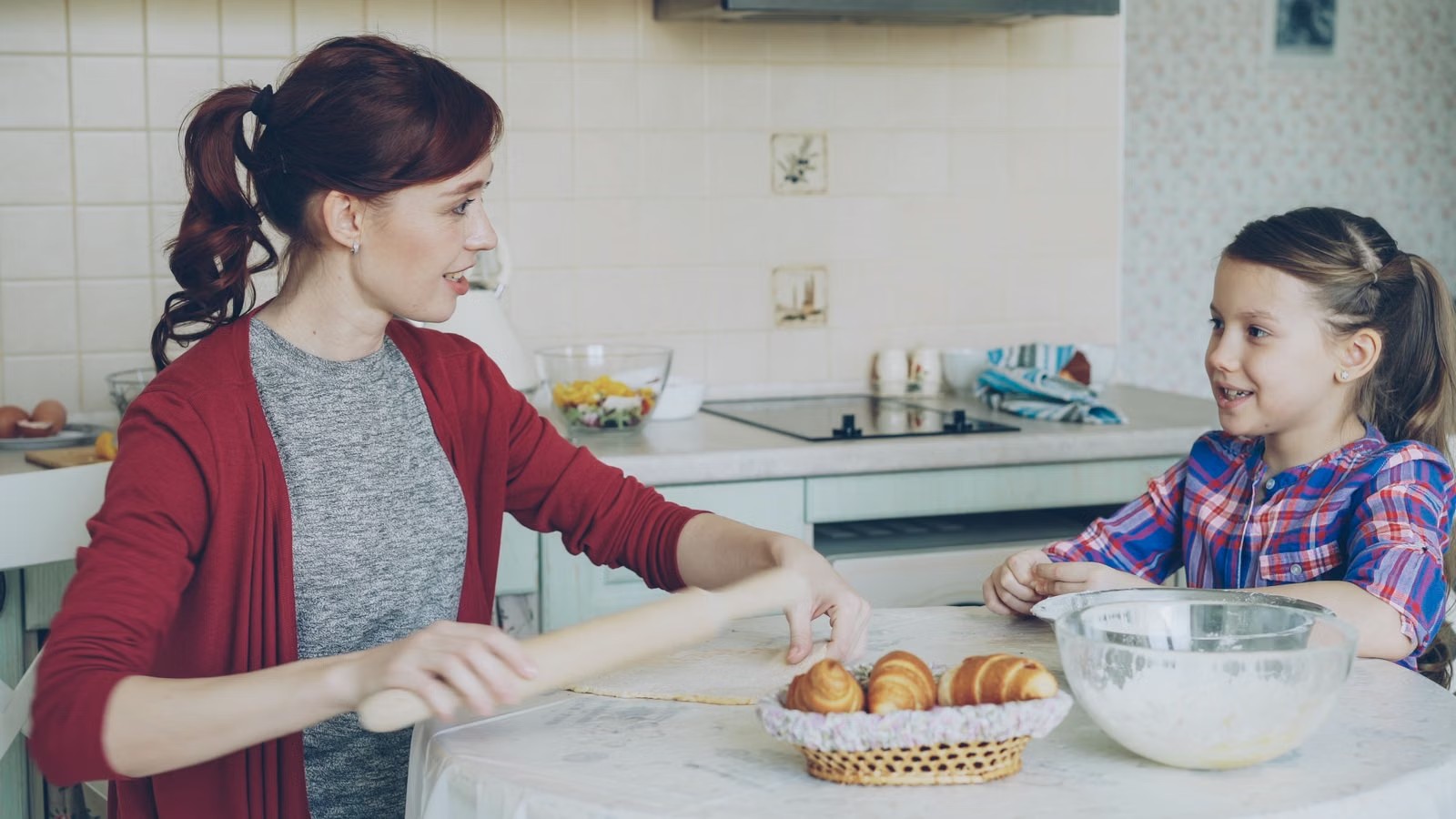
Force three is the one parents underestimate most. It is rarely stated out loud, but if you listen to how children describe it, it is almost always about dignity rather than difficulty. “I sound like a baby.” “I can’t say it properly.” “Everyone waits.” A child who has been corrected a few too many times has learned something precise: in Japanese, speaking produces criticism, and silence does not. Silence wins.
What the research says about which families keep the language
The most useful study for parents in this situation is not about teaching methods at all. It is about who in the household speaks what.
Annick De Houwer surveyed 1,899 families in Flanders, Belgium, in which at least one parent spoke a language other than the majority language at home, covering roughly 4,500 children. Every child spoke the majority language. Whether they also spoke the home language varied enormously, and it varied with one thing: the pattern of what the parents actually used.
The share of families in which at least one child spoke the minority language
The gap between the top and bottom patterns is not small. It is the difference between almost certain and distinctly unlikely.
| What the parents used at home | Families where a child spoke the minority language |
|---|---|
| Both parents used only the minority language | 96.9% |
| One parent minority only; the other used both | 93.4% |
| Both parents used both languages | 79.2% |
| One parent minority only; the other majority only (classic “one parent, one language”) | 74.2% |
| One parent used both; the other majority only | 35.7% |
De Houwer, A. (2007), “Parental language input patterns and children’s bilingual use”, Applied Psycholinguistics 28(3). Differences between the top two patterns and the bottom three were statistically significant. Flanders, not Japan — but the mechanism is not country-specific.
Two findings in that table are worth sitting with.
First, “one parent, one language” is not the gold standard it is usually sold as. At 74.2% it is middling. It works far less reliably than the pattern where the minority language simply dominates the house.
Second, and more painfully for many international families: the worst pattern at 35.7% is the one where the Japanese-speaking parent uses both languages and the other parent uses only the majority language. That is a very common shape for a Japanese parent married to a non-Japanese partner, living in the partner’s country. If that is your household, the odds in that study were roughly one in three — and you have been doing everything you were told to do.
The practical reading is not “speak only Japanese or fail”. Many families cannot: a partner needs to be included in dinner conversation, and shutting them out to protect a language is a bad trade. The reading is that household input alone is a weak lever for most international families, and that if household input is all you have, the base rates are against you. Something has to supply the missing hours and the missing social pressure from outside the house.
On how much is needed, the honest answer is that the research does not give a clean number. Barbara Pearson, reviewing the social factors in childhood bilingualism, describes a “critical mass” of input below which children do not become active speakers and above which more exposure stops making much difference — but the threshold moves with the child, the language, and the quality of the interaction. Anyone quoting you an exact percentage is going beyond the evidence. What is well supported is the direction: interactive, responsive time with other people counts for far more per hour than passive exposure, which is why an hour of real conversation beats three hours of background anime.
If one parent does not speak Japanese
The De Houwer figures land hardest on international families, so it is worth saying directly what they do and do not mean. If you are the Japanese-speaking parent and your partner speaks only the local language, you are in the pattern that performed worst in that study. You are also, almost certainly, doing nothing wrong.
The arithmetic is simply against you. In that household Japanese is available from one adult, for a fraction of the day, and every shared family moment — dinner, weekends, holidays, the car — has to run in a language everybody understands. Insisting on Japanese at the table means excluding your partner from their own family’s conversation. Most people are not willing to pay that, and they should not have to.
What tends to help, in rough order of how much difference it makes relative to effort:
- Claim specific slots rather than the whole day. Bedtime, the school run, Saturday breakfast. A predictable twenty minutes beats an aspiration to “speak more Japanese” that quietly dies by Wednesday.
- Get the non-Japanese parent visibly on side. Children read whose language matters in a house. A partner who learns thirty words, asks what something means and treats Japanese as an asset shifts the child’s attitude more than another hour of lessons.
- Work on the sibling pair. If you have two children, the language they use with each other is probably the biggest block of conversation in their day. Giving them a shared activity that only exists in Japanese does more than correcting either of them individually.
- Outsource the peer problem. You cannot be your child’s Japanese-speaking friend. This is the part that has to come from outside the house, and it is the part most worth paying for.
- Protect grandparents as a reason, not a duty. A weekly call where a grandparent needs help with something real — a photo, a recipe, a game — produces more speech than one where the child is asked to perform.
One reframing that families find useful: in this household Japanese is not going to be acquired the way the majority language is, by osmosis. It has to be built, deliberately, like an instrument. That sounds like more work, and it is, but it also means the outcome is a matter of design rather than of how well you held the line this week.
The four turning points, and how fast it goes
Language loss in children is not gradual. It is a staircase. Parents who recognise the step they are standing on tend to act a year or two earlier, which matters more than anything else they do.
Four predictable steps, and what each one looks like
| Turning point | What you notice | What is really happening |
|---|---|---|
| Starting school | Within 3–6 months, replies switch to the school language. Japanese answers get shorter. | The daily share of Japanese collapses. This is the single biggest step. |
| A younger sibling starts school | The children’s shared language flips. Japanese becomes “the language you use with Mum”. | Siblings are a child’s most-used conversation partner. Once that pair switches, it rarely switches back on its own. |
| Roughly ages 7–9 | The child starts actively avoiding Japanese: changing the subject, refusing to speak in front of others, saying they have forgotten. | Social self-consciousness arrives. Sounding younger than their age becomes intolerable. |
| Adolescence | Either a hard refusal, or an unexpected return — sometimes through music, games or a trip to Japan. | Identity takes over from habit. This is the point at which the child’s own motivation starts to matter more than yours. |
General pattern reported across the bilingual-family literature and in the experience of teachers working with children abroad; your child may skip a step or sit on one for years.
The sibling step deserves more attention than it gets. Parents spend years working on their own consistency while the real language environment — two children talking to each other for hours a day — runs entirely in the other language. If you have more than one child and they speak English to each other, that is usually the largest single block of your child’s waking conversation, and no amount of parental discipline at dinner outweighs it.
The adolescence step is the hopeful one. Children who went completely silent at nine quite often come back at fourteen, when Japanese stops being their mother’s language and starts being theirs — something connected to who they are, who they want to talk to, or where they might study. The job in the silent years is not to force speech. It is to keep enough comprehension alive that the door is still open when they decide to walk through it.
What does not work — including the things most parents try first
Almost every family arrives at the same four interventions, in the same order. None of them are stupid. They are simply aimed at the wrong half of the problem: they add vocabulary to a child whose vocabulary was never the bottleneck.
| What families try | Builds vocabulary | Creates a reason to speak | Honest verdict |
|---|---|---|---|
| “Speak Japanese to me” / refusing to answer English | × | △ | Works for some children for a few weeks. For most it turns Japanese into a site of conflict, and the child answers less overall. |
| Apps and gamified lessons | ○ | × | Genuinely useful for kana, kanji and vocabulary. No app has ever made a child need to be understood. |
| Anime, YouTube, Japanese TV | ○ | × | Excellent for keeping comprehension alive, which is worth a lot. Passive input does not produce speech on its own. |
| One-to-one online tutoring | ○ | △ | The adult accommodates the child — slows down, guesses, fills gaps. Good for literacy and exams; weaker for spontaneous speech. |
| Saturday supplementary school (hoshuko) | ○ | ○ | Where it fits, it is strong: real peers, real Japanese. But it assumes grade-level Japanese, a free Saturday and a commute — which is why so many families drop out. |
| Peer conversation in Japanese, several times a week | △ | ○ | The only item on this list that targets production directly. Hardest to arrange from abroad, which is exactly why it gets skipped. |
Two of these deserve a closer look, because the conventional advice about them is wrong in opposite directions.
Refusing to understand your child’s English. This is the most commonly recommended tactic and the one with the highest cost. Pretending not to understand a child who knows perfectly well that you do is not a language technique; it is a small deception, and children notice. In families where it works, it usually works because the child is young, the relationship is easy and it was introduced as a game. In families where it fails, it fails hard: the child simply stops initiating conversations, and you lose both the Japanese and the talking. If you try it, try it for a fortnight and watch the total volume of conversation, not the proportion in Japanese. If the total drops, stop.
One-to-one tutoring. Private lessons look like the premium option, and for reading, writing and exam preparation they often are. But the core of this problem is social, and a one-to-one lesson removes the social element entirely. A patient adult tutor will wait, infer, and accept a half-finished sentence — which is kind, and which is precisely the accommodation that lets a child avoid producing a full one. Children who have had two years of weekly one-to-one lessons and still will not speak Japanese to another child are common. The lessons were not wasted; they were just not aimed at this.
What actually works: one condition, and it is non-negotiable
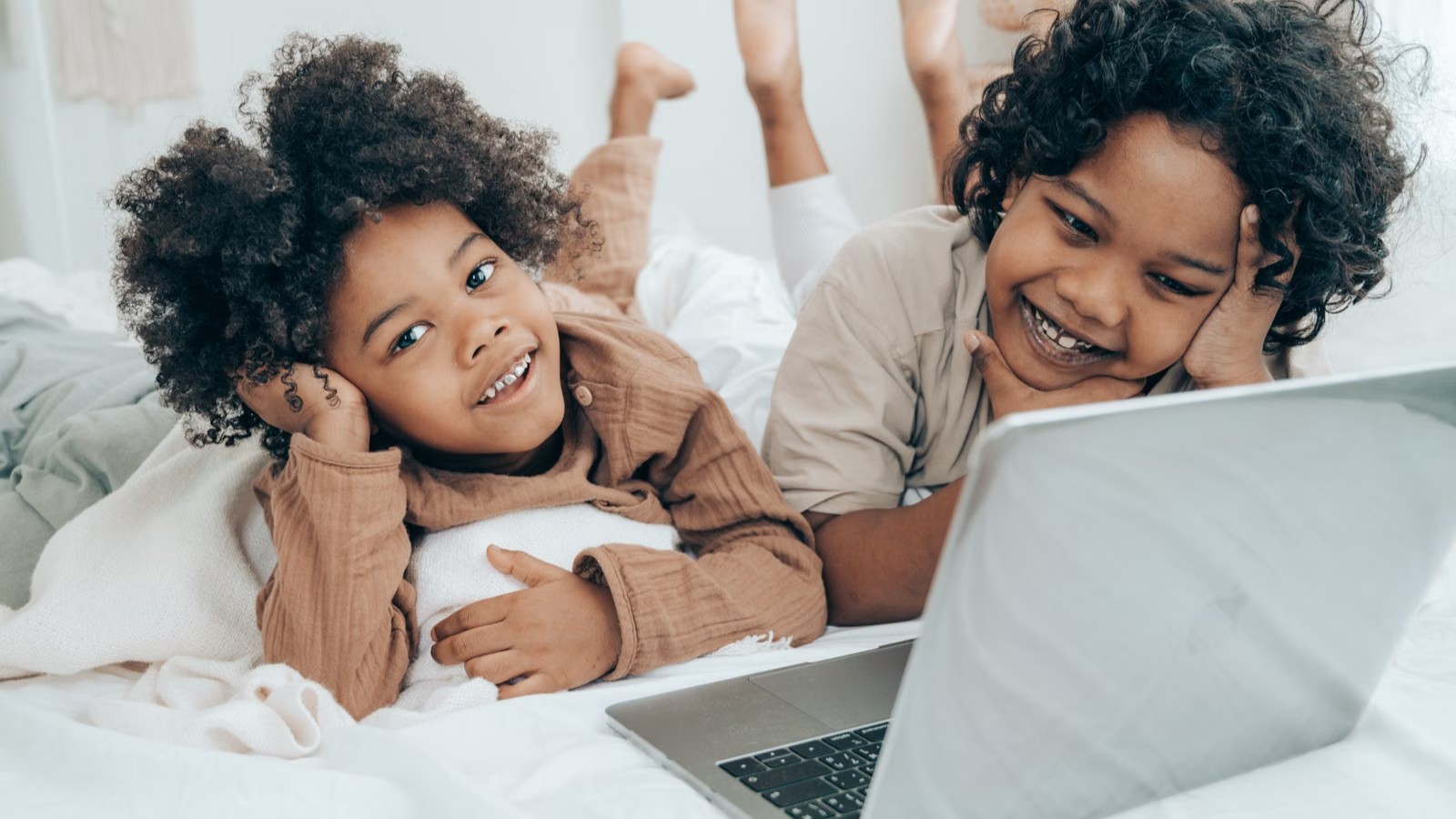
Strip everything else away and the families who get speech back have arranged one thing: their child regularly talks to other children who do not speak the majority language.
The mechanism is unglamorous. Another child will not slow down for you. They will not guess your meaning out of kindness, they will not accept a half-sentence, and they will move on to someone else if you take too long. They will also laugh at your joke if you land it, which is the reward that no curriculum can manufacture. Under those conditions a child’s dormant Japanese is forced out of storage and into real time, and it comes back faster than parents expect — often in weeks, because the words were never gone.
This is also why summer trips to Japan produce such dramatic results. Three weeks with cousins does more for spoken Japanese than a year of lessons, and every family who has done it knows this. The problem has never been that parents do not know what works. The problem is that the thing that works has historically required a plane.
What to say instead
Most of the friction in these households happens in about six recurring moments. Changing the words you use in them is free, takes no extra time, and tends to move more than any resource you could buy.
| The moment | What usually gets said | What works better, and why |
|---|---|---|
| They answer in English | “In Japanese!” | Reply in Japanese as if nothing happened, and keep going. Modelling costs the child nothing; a command costs them face and invites refusal. |
| They make a mistake | Correcting the particle or the ending | Repeat their sentence back correctly as part of your natural reply. They hear the right form without being marked wrong. |
| They say they have forgotten a word | “You know this one.” | Just give them the word, immediately and without comment. Making retrieval cheap keeps the sentence alive; making it a test ends it. |
| They refuse outright | “Why won’t you even try?” | “That’s fine — tell me in English.” Then continue in Japanese yourself. You keep the conversation and the input; you lose only this round. |
| They sound younger than their age | “Your cousin can say that.” | Never compare. Name what they managed instead: “You explained the whole thing.” Dignity is the resource you are protecting. |
| Someone praises their Japanese | “Oh, it’s not very good.” | Accept it. Children overhear every word of this, and a parent’s modesty is heard by the child as a verdict. |
The thread running through all six is that the child should never pay a social price for speaking Japanese imperfectly. Every correction, comparison and sigh is a small tax on production, and children respond to taxes the way everyone does — by doing less of the taxed activity. Remove the tax and speech is simply cheaper than it was, which is most of the battle.
How much does your child actually need per week?
There is no validated number, and anyone who gives you one with a decimal point is guessing. What experienced teachers of children abroad observe, and what is consistent with the input research, is roughly this — offered as a planning tool, not a law.
What different weekly amounts of real Japanese conversation tend to produce
| Interactive Japanese per week | Realistic expectation |
|---|---|
| Under 1 hour | Comprehension is maintained if a parent is also speaking Japanese daily. Speech generally continues to decline. |
| 1–2 hours | Decline slows. The child keeps a usable set of phrases. Spontaneous speech rarely restarts at this level. |
| 3–5 hours, spread across several days | The level at which most families start reporting unprompted Japanese at home. Frequency matters more than total: four short sessions beat one long one. |
| 6+ hours with peers | Visible gains in fluency and confidence. Approaching what a few weeks in Japan achieves, sustained over months. |
“Interactive” means two-way conversation with another person. Videos, apps and listening practice are valuable but are not counted here. Individual children vary a great deal; treat this as a way to plan, not a promise.
The two things worth taking from that table are that frequency beats duration — twenty minutes on four days does more than ninety minutes on one — and that the useful threshold is lower than most parents assume. Families often believe they need to recreate a Japanese school. They do not. They need a few hours a week of the right kind of hour.
What it costs if nothing changes
Most families are not chasing fluency for its own sake. They are trying to avoid a specific set of losses, and it helps to name them honestly rather than in the abstract.
The relationship. This is the one parents mention last and feel first. A parent who is fully themselves in Japanese and approximate in English ends up parenting in their second language: the comfort, the teasing, the precise word for what they mean. Grandparents go from people your child knows to people your child is polite to for fifteen minutes on a video call. Nobody plans this. It arrives by accident, one easy conversation at a time.
Options later. A child who keeps spoken Japanese keeps a set of doors: university in Japan, work that uses the language, the ability to spend a summer there without being a guest. None of these have to be used. All of them close quietly if the language goes.
And if you ever move to Japan. This is where the cost stops being sentimental and becomes measurable, and the Japanese government’s own figures are blunt about it.
As of 1 May 2025, 84,759 children in Japanese public schools needed Japanese-language instruction. The number most parents abroad do not expect is the breakdown: 11,446 of them are Japanese nationals — overwhelmingly children who grew up overseas and came back. Holding a Japanese passport, having a Japanese parent, and understanding Japanese at home does not exempt a child from arriving at a Japanese school unable to work in the language.
What happens next is uncomfortable reading. Among students who need Japanese-language instruction, the rate of going on to upper secondary education is 91.5%, against 98.9% for students overall. The rate of going on to university and similar institutions is 41.2%, against 75.0% overall. The high-school dropout rate is 6.4%. These are not statements about ability. They are what happens when a child has to learn the curriculum and the language of the curriculum at the same time, in their teens, with the clock running.
Children needing Japanese-language instruction in Japanese public schools
| Figure | Number | What it tells a family abroad |
|---|---|---|
| Children needing Japanese-language instruction | 84,759 | Roughly double the figure of nine years earlier. |
| — of whom foreign nationals | 73,313 | Families moving to Japan for work. |
| — of whom Japanese nationals | 11,446 | Mostly returnees. A Japanese passport is not a language. |
| Schools with at least one such student | 12,668 (39% of public schools) | This is now normal, not exotic. Schools have seen it before. |
| Receiving instruction under a “special curriculum” (primary and lower secondary) | 76.4% | Real support exists — but roughly one in four does not get it. |
| Progression to university etc. — these students vs all students | 41.2% vs 75.0% | The gap that forms when language and curriculum are learned together. |
Source: Ministry of Education, Culture, Sports, Science and Technology (MEXT), survey of the acceptance of children requiring Japanese-language instruction, figures as of 1 May 2025, published June 2026. “Special curriculum” (tokubetsu no kyōiku katei) allows 10–280 class hours a year of Japanese instruction, normally as pull-out lessons at the child’s own school.
None of this is an argument for panic, and it is certainly not an argument that your child will struggle. It is an argument for the thing that is cheap now and expensive later: keeping spoken Japanese alive while your child is eight, so that if you ever land in Japan when they are fourteen, they arrive with a language rather than a language problem. If a move to Japan is actually on your horizon, we have separate guides on how Japanese public elementary school works for foreign children and on what returnee children struggle with after they arrive.
If your child has almost no Japanese left — or never had any
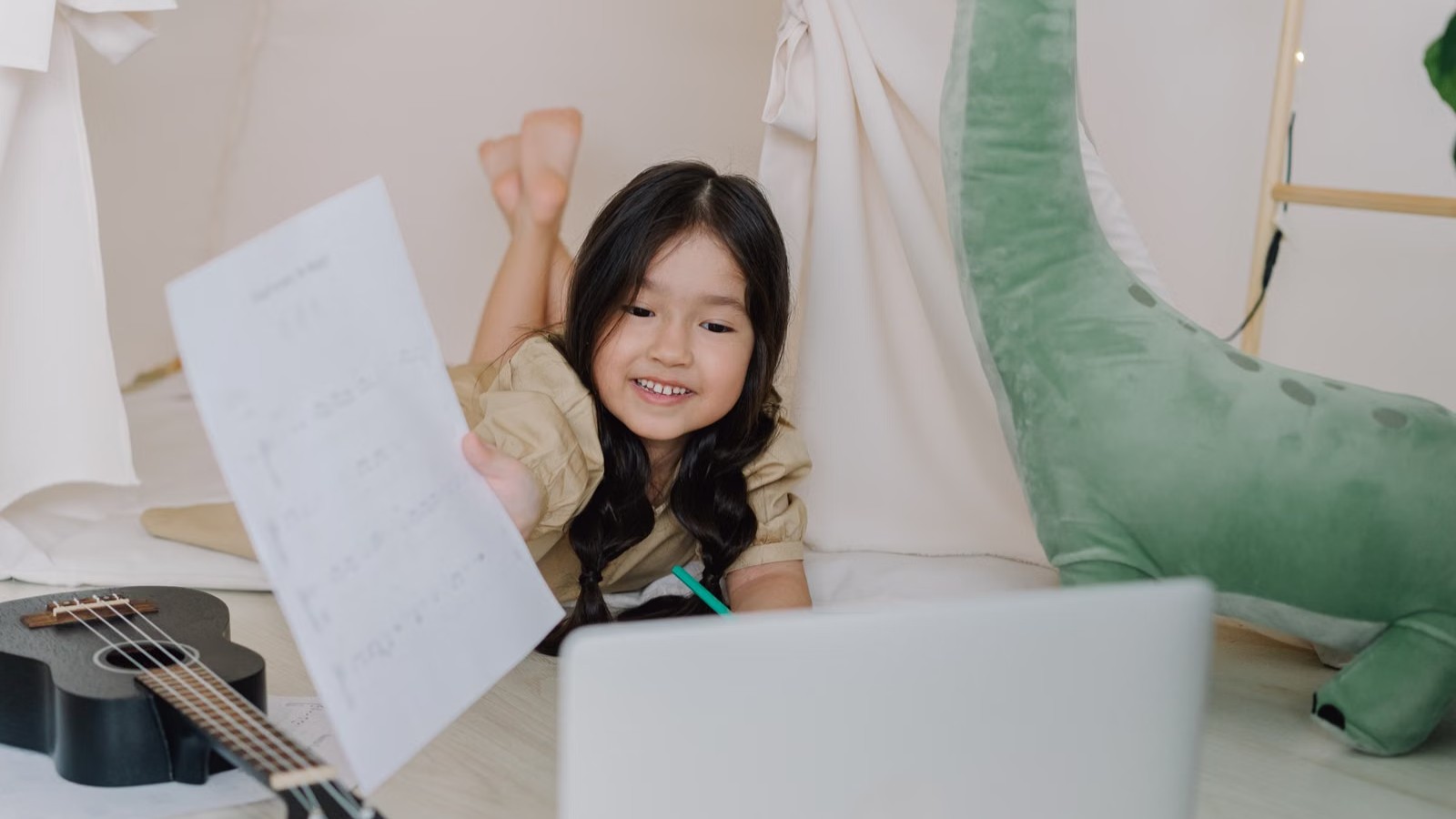
Everything above assumes a child who understands and will not speak. A large number of families are further along than that, or started somewhere else entirely: the child of an international marriage who grew up in English and has maybe thirty words of Japanese; the child who spoke it at four and genuinely cannot follow a conversation at nine; the child with no Japanese heritage at all who has decided, through anime or a friend or stubbornness, that this is their language now.
Three things are worth knowing.
The floor is higher than it looks. Children who had early exposure and appear to have lost it almost always re-acquire faster than true beginners — the phonology in particular tends to survive. A child who sounds like they have forgotten everything frequently has a great deal of dormant structure waiting for a reason to come out.
Starting from zero is a different job, not a harder one. A child starting with no Japanese needs the basics explicitly taught, in a group where being a beginner is normal. The thing that must not happen is placing them in a class of near-native children, where they will be the slowest person in the room and will conclude within a month that Japanese is not for them. Grouping by what a child can currently say — not by their age or their grade — is the single most important feature to look for in any programme.
Mixed classrooms can be the best thing available. A group that spans a Tokyo-born ten-year-old and a beginner from Toronto gives the beginner something a beginners-only class cannot: a real reason to speak, to someone who genuinely does not have the English. That is the condition from the previous section, and it is worth a great deal.
One honest caution. If your child goes silent in Japanese specifically in group settings but speaks it at home, and this persists for months, consider whether something beyond language reluctance is going on; our guide to selective mutism in a bilingual child explains how to tell the ordinary silent period apart from something that needs support.
If you have more than one child, the conversation that matters most is probably the one they have with each other — our guide to why siblings switch to English and how to undo it covers that. If only one parent in your household speaks Japanese, the guide for that household goes into the research properly. And if the loss you feel most is your child’s relationship with their grandparents, this guide is the practical one. All of them sit in our Keeping Japanese Alive hub.
Where an online Japanese school fits — and where it does not
If the condition that matters is regular conversation with peers who will not switch, the practical question becomes: where do you find those peers when you live in Toronto, Dubai or Melbourne?
For some families the answer is a local hoshuko, and if one is within reach and your child is coping with it, it is hard to beat. But supplementary schools assume a child who can already follow grade-level Japanese, a free Saturday, and a drive. Families drop out when any one of those three fails — and children who are behind the class are the first to stop wanting to go.
TOMODACHI JAPAN (ともだちじゃぱん) is an online Japanese school built by NIJIN for exactly the gap this article describes. The design choices map directly onto the problem:
- Classes of eight, with a teacher present throughout — small enough that no child can hide, large enough to be a real group rather than a lesson
- Grouped by how much a child can currently speak, not by age or school grade — which is what makes it usable by a beginner and by a near-native child at the same time
- Children in Japan are in the classes too, through NIJIN’s sister school NIJIN Academy (over 1,000 students enrolled to date) — so there are peers who genuinely do not have the English
- Conversation and project work rather than grammar drills, starting from what the child is actually interested in
- No commute, and time zones are accounted for; families can attend daily, or weekends and after-school only
- Reading, writing and kokugo continue alongside, for families keeping a return to Japan open
TOMODACHI JAPAN is an online Japanese school for children growing up abroad — classes of eight, grouped by what a child can say rather than by age, alongside peers in Japan who do not speak English. Beginners from zero are expected, not tolerated. The pilot opens in December 2026.
Who this is not right for
We would rather you did not sign up for something that will not help, so here is the honest list.
- If your child needs to pass a specific exam — GCSE, HSC, VCE, AP Japanese — a specialist tutor or an exam course is a better use of the money. Conversation classes will help the speaking component and little else.
- If the problem is reading and writing, not speaking. A child who talks happily in Japanese but cannot read is a different project, and a hoshuko or a literacy-focused tutor is a closer fit.
- If your child is already thriving at a Saturday school. Do not replace something that is working. If anything, add rather than swap.
- If you need something this month. It does not open until December 2026.
- If your child’s reluctance to speak looks like anxiety rather than rust — silence across settings, distress rather than avoidance — start with support for that, not with more Japanese.
A realistic 90-day plan
If you want to change something this term, this is the sequence we would suggest. It is deliberately small, because plans that require a household to transform itself do not survive contact with a Tuesday.
Suspend all correction of spoken Japanese. Respond to meaning only. Pick one daily anchor — the walk to school, dinner, bath — and make it reliably Japanese, without announcing a rule. Keep a note of how often your child uses Japanese unprompted; you need a baseline, because progress here is slow enough to be invisible without one.
This is the one that matters. Find a context in which your child speaks Japanese to another child at least twice a week: a cousin on a standing video call, a local family, a group class, a trial at an online school. One-to-one with a bilingual adult does not substitute. Protect the slot the way you would protect a sports practice.
Attach Japanese to something your child already wants — a game, a series, a recipe, a grandparent who needs help with something. Then stop steering. Compare against your day-one note rather than against a fluent cousin, and expect the first real gains to show up as unprompted single sentences, not conversations.
One more thing, which is not a technique. Children pick up whether a language is a burden or a gift from how the adults around them hold it. A household where Japanese is a source of pressure, disappointed sighs and comparisons produces children who associate it with failing. A household where it is where the jokes live produces children who come back to it at fifteen. You cannot make a child speak. You can make the language a pleasant place to return to, and that turns out to be the longer lever.
Frequently asked questions
Sources used for this article
- De Houwer, A. (2007), “Parental language input patterns and children’s bilingual use”, Applied Psycholinguistics 28(3) — survey of 1,899 families: doi.org/10.1017/S0142716407070221
- Pearson, B. Z. (2007), “Social factors in childhood bilingualism in the United States”, Applied Psycholinguistics 28(3), on “critical mass” of input: umass.edu (PDF)
- Colorín Colorado, “What are BICS and CALP?”, summarising Cummins and Collier & Thomas (1995) on time to conversational versus academic proficiency: colorincolorado.org
- MEXT, survey of the acceptance of children requiring Japanese-language instruction, figures as of 1 May 2025 (published June 2026) — 84,759 children; 73,313 foreign nationals and 11,446 Japanese nationals; 12,668 schools; progression and dropout rates: mext.go.jp (PDF)
- MEXT, outline of the “special curriculum” for Japanese-language instruction (in force since 1 April 2014; 10–280 class hours a year, normally pull-out lessons): mext.go.jp (PDF)
- MEXT, overview of Japanese educational institutions overseas — 94 Japanese schools and 242 supplementary schools worldwide, as of 2024: mext.go.jp
- Ministry of Foreign Affairs of Japan, Annual Report of Statistics on Japanese Nationals Overseas, as of 1 October 2025 — 1,298,170 Japanese nationals living abroad: mofa.go.jp
- MEXT, guidebook on school enrolment for foreign children, available in English and seven other languages: mext.go.jp
- TOMODACHI JAPAN official website — class size, grouping, schedule and opening dates: tomodachi-japan.nijin.co.jp
Your child already understands Japanese. What they need is a few hours a week with other children who cannot switch to English — which is what TOMODACHI JAPAN is built to provide. Classes of eight, grouped by what a child can say, with peers in Japan. The pilot opens in December 2026 and the school guide is free.
Published: 5 October 2026 / Last updated: 5 October 2026