Menu
BASICS
How Japanese schools work Japanese phrases for school Glossary of school termsWAYS TO LEARN
Free schools Education support centers Online schools Homeschooling in Japan International schools Correspondence high schoolsMORE
Neurodivergent children Where to get help Attendance and costs Learning Place Finder 日本語サイトへDo Children Make Friends at Online School? An Honest Look
- Why findings from pandemic remote learning tell you little about a planned online school
- What children themselves say they miss when school moves home
- Which children tend to find online settings easier, and which find them harder
- What makes an online class genuinely social: group size, the same peers daily, adult facilitation
- How much in-person life a family realistically has to build around online school each week
- Questions to ask on a trial lesson, and the limits no online school can design away
This is general information for parents, not medical, educational or legal advice. It is also worth saying plainly at the start: no school of any kind can promise your child friendships. What a school can do is create the conditions in which friendships become more likely, and this article is about judging those conditions.
What the research shows — and where it runs out
Parents are usually handed one of two confident stories: that online school destroys social skills, or that it is just as social as a classroom. Neither is well supported, because the research base for full-time online schooling of children is far smaller than the strength of the opinions around it.
The most sober assessment comes from the National Education Policy Center at the University of Colorado Boulder, which has reviewed full-time US virtual schools annually since 2013. Its 2023 report concluded that virtual school performance “remains poor” and that “little if any research supports the claimed benefits of virtual schooling.” That review is mostly about academic outcomes, which is itself telling: social development in full-time online schools has been studied far less than test scores. An older review of practice, Socialization in Online Programs by Watson and Gemin for the North American Council for Online Learning, wrote that “even with the success of socialization in online schools, this is clearly an emerging area” — and that was in 2008.
So the honest summary is this: there is strong evidence that connection at school matters, and very little about how reliably an online school produces it. The US Centers for Disease Control and Prevention analyzed its 2021 Youth Risk Behavior Survey and found 61.5% of high school students felt connected to others at school — and that 22.0% of students with high connectedness reported poor mental health, against 40.1% of those with low connectedness. Belonging is not a nice extra.
Why lockdown learning is not a planned online school
Much of what parents believe about online school comes from 2020 and 2021, and that is the biggest source of confusion in this decision.
Charles Hodges and colleagues drew the distinction early, in EDUCAUSE Review. They called what happened “emergency remote teaching” — “a temporary shift of instructional delivery to an alternate delivery mode due to crisis circumstances” — and noted that a fully online course normally takes six to nine months to design, while pandemic timelines “ranged from a single day to a few weeks.”
A second difference matters even more for friendship. In 2020, children lost their classmates and their playground, clubs, sports and birthday parties in the same week. A family choosing online school in normal times loses only the first of those — and only if they let it happen.
| Pandemic remote learning | A planned online school |
|---|---|
| Designed in days, by untrained staff | Designed as an online school from the start |
| Clubs, sport and friends’ homes closed too | The rest of local life stays open |
| Nobody chose it | The family chose it, often after a hard year |
| Often 25–30 children on one screen | Group size is a design choice you can ask about |
| Little structured social time | Social time can be timetabled deliberately |
This does not mean a planned online school will be social. It means the pandemic did not prove that it cannot be. Only the second statement is supported by the evidence.
What children say they miss
When researchers ask children rather than adults, the answers are consistent. They rarely say they miss lessons. They miss the parts of school nobody timetables.
Widnall and colleagues interviewed 25 students aged 14–15 at three schools in south-west England in 2020–21, publishing in the International Journal of Environmental Research and Public Health. Students valued face-to-face contact above almost everything, and online contact did not substitute for it; one still felt “a bit lonely” even back at school with a reduced year group. Another said of the closure: “Time and days just all blurred into one and there was no routine really.” That second loss argues for a real online school with a real timetable, and against loosely supervised learning at home.
The playground is not a trivial loss either. In its 2026 policy statement on recess, the American Academy of Pediatrics describes recess as helping children “navigate social relationships and build confidence,” and says breaks from instruction “help students of all ages to reset, focus better and manage stress.” Its earlier clinical report on play argued that “free play and recess need to remain integral in a child’s day.”
| What children miss | Can online school replace it? |
|---|---|
| Chatting with no adult listening | Partly — only if unstructured time is built in |
| Lunch and break as a social event | Partly — some schools run open rooms |
| Running around, rough-and-tumble, sport | No. This must come from outside |
| Clubs, bands, teams, productions | Online versions exist; physical ones do not |
| A routine and somewhere to be | Yes, if the timetable is real |
The third row is the one families most often underestimate, and it is why the parent’s job below is not optional.
Which children find online school easier
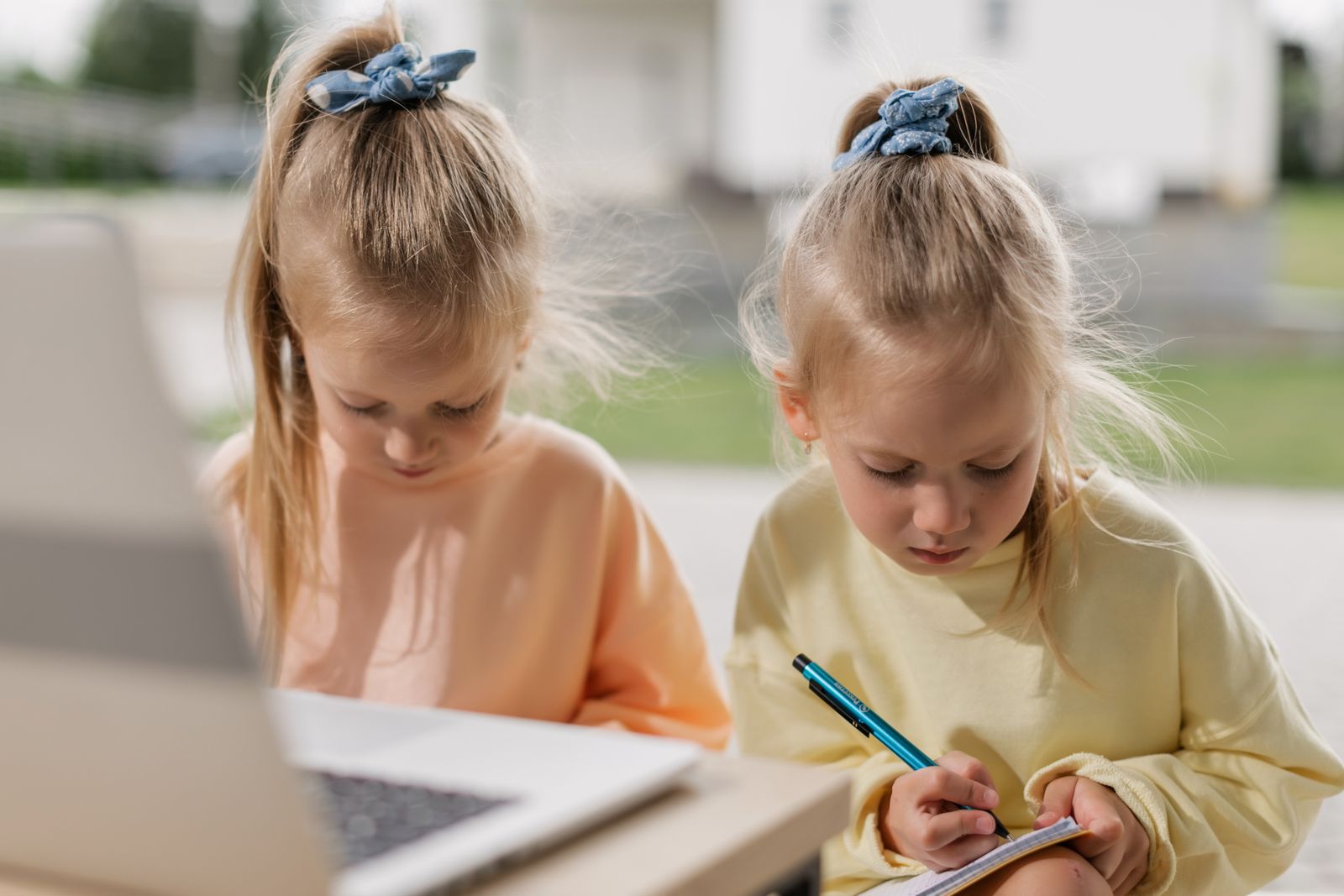
This question has no single answer, because it depends on the child. For some, a class of thirty is not a social opportunity at all but a daily threat to be survived — and little friendship-making happens while a child is bracing themselves.
It is worth noticing who education systems themselves design distance provision for. The New South Wales Department of Education in Australia runs distance education as “an equity program for NSW students who are geographically isolated or whose individual circumstances prevent them from regularly attending school.” Its enrollment procedures list eligible categories including geographic isolation, families travelling in Australia or overseas, students with medical conditions, young parents, vocationally talented students, additional learning and support needs, and “extraordinary circumstances.”
Parent-reported reasons point the same way. In the 2019 US National Household Education Survey, reported by the National Center for Education Statistics, 80% of homeschooling parents gave “concern about the environment of other schools, such as safety, drugs, or negative peer pressure” as a reason, and 25% gave it as their single most important one — more than any other.
| Often easier online | Often harder online |
|---|---|
| Children who have been bullied and are avoiding school | Children who connect mainly through physical play |
| Anxious children who freeze in large groups | Children who need movement to stay regulated |
| Neurodivergent children overwhelmed by noise and crowds | Children who need an adult present to stay on task |
| Children with medical conditions or fluctuating energy | Children already withdrawing from all contact |
| Families who move every year or two | Children whose local life is already thin |
One caution deserves its own line. For an anxious child who is avoiding school, going online can be a genuine relief and a route back to learning — or it can make avoidance easier and shrink their world. Which one it becomes usually depends on what happens outside the screen. If the difficulty looks like anxiety rather than a bad fit, our guide to school anxiety in third culture kids covers the signs worth taking to a professional first. If it is bullying, bullying at an international school is the better starting point.
What makes an online class social — or not
“Online school” describes a delivery method, not a social design. Two schools using the same software can produce completely different social experiences, and the differences are visible before you enroll.
The UK Department for Education’s standards for accredited online education providers put it bluntly: “online learning can be an isolated learning experience, and therefore, it is crucial that pupils learn to work alongside others, for instance, through structured and well-planned group work where practicable.” Isolation is treated as the default a provider must design against.
England’s Education Endowment Foundation reached a related conclusion in its 2020 review of remote learning evidence: “the quality of remote teaching is more important than how lessons are delivered,” and getting pupils to interact with each other online “can boost the impact of remote learning.” Peer interaction is part of what makes the lesson work, not decoration on top of it.
What turns a video call into a class with friends in it
These are design choices, not luck. You can ask about all three before paying anything.
01
The same few, daily
Friendship grows from repeated hours with the same people. A small group that meets every day beats a large rotating cohort, however lively the chat looks.
02
Adult facilitation
An open chat box is not socializing; it is a free-for-all that confident children dominate. A named adult who runs a circle, pairs children and notices the quiet one changes the outcome.
03
Talk with no task
Children need time together that is not an assignment. Ask whether there is anything like a break, a circle or an open room — and who supervises it.
If a school cannot answer these three questions precisely, that is your answer.
A few smaller signals help too. Cameras on is a practical matter rather than a moral one: it is hard to feel known by people you have never seen. Small-group projects give a shy child a reason to speak that “any thoughts, anyone?” never provides. And a class that stays together across the year is simply a better place to build a friendship than one reshuffled each term.
The parent’s job: building the in-person half
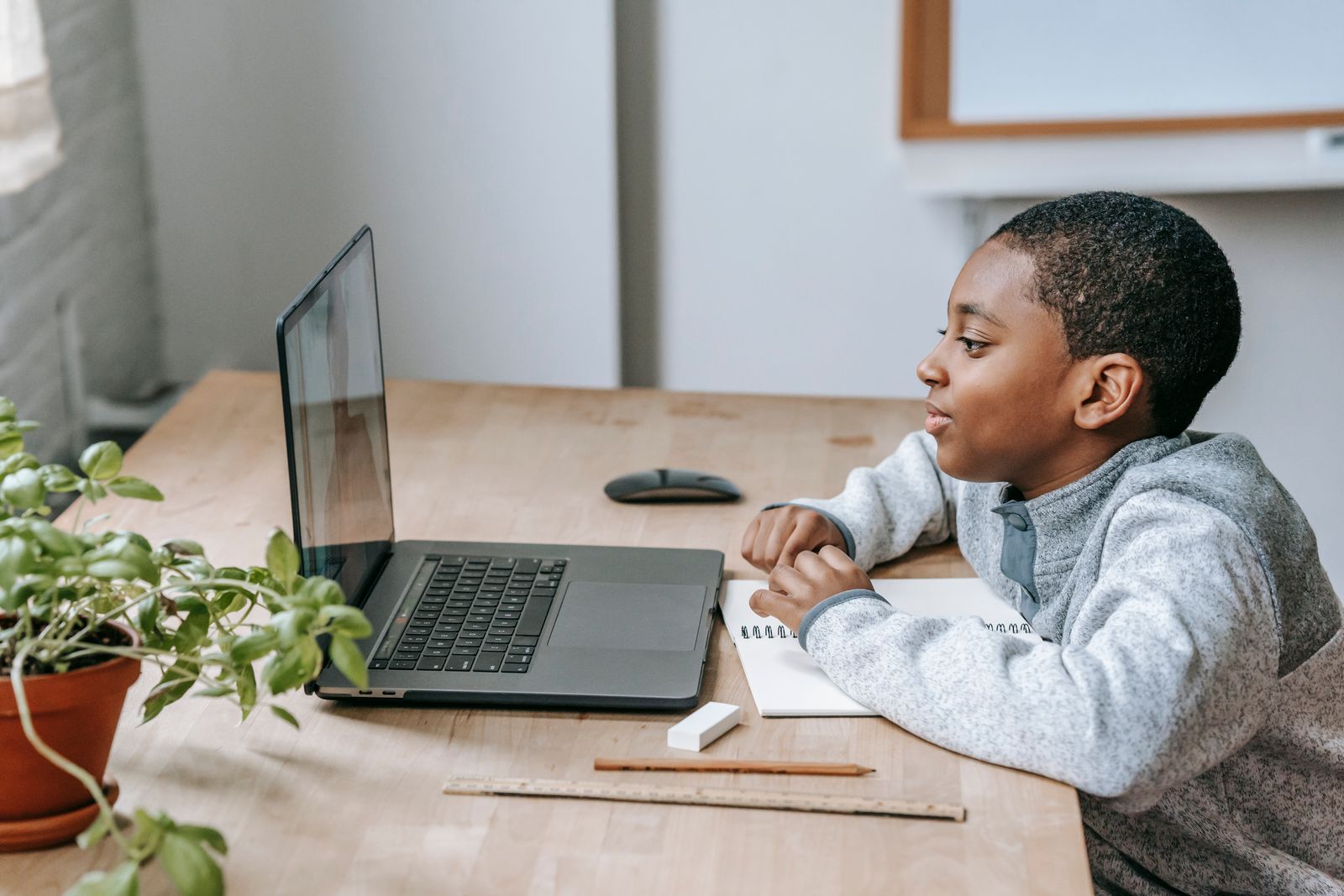
This is the part online schools mention least and that determines the outcome most. If your child learns online, the physical, unstructured, running-around part of childhood has to be arranged by you.
Start with the baseline. The World Health Organization recommends that children aged 5–17 “should do at least an average of 60 minutes per day of moderate-to vigorous-intensity, mostly aerobic, physical activity, across the week,” with muscle- and bone-strengthening activity “at least 3 days a week,” and that they “limit the amount of time spent being sedentary, particularly the amount of recreational screen time.” Sixty minutes a day is seven hours a week. In a school building much of that arrives free, through break times, PE and the walk to the gates. Online, none of it does. WHO also notes that 80% of adolescents worldwide already fall short — so this is not an online-school problem alone. It just becomes visible, and yours.
| What to build in | Why it works | Typical commitment |
|---|---|---|
| One team sport or martial art | Same children weekly, physical play, a role in a group | 2 sessions a week plus travel |
| A local-language or community class | Roots your child where you actually live | 1 session a week |
| An interest club: music, chess, coding, drama | A shared interest gives shy children something to talk about | 1 session a week |
| Unstructured neighborhood time | Replaces the playground; no adult agenda | Most days, even 30 minutes |
| Hosting one child at home | Turns an acquaintance into a friend | Every week or two |
That table is a planning aid, not a research finding. But add it up honestly before you enroll: for most families it comes to four to six outings a week, several hours of driving, and a parent who is available. Full-time online study assumes an adult is around, too — NSW requires every full-time distance education student to have a named primary supervisor who declares their willingness to fulfil the role.
If you have recently moved and your child has no local circle yet, that comes first, before any decision about schooling; we cover it in helping your child make friends after moving abroad.
How to test a school before you commit
Most online schools offer trial lessons. Treat one as an audition for the school, not for your child: you are looking for evidence, not enthusiasm.
Three tests worth running on any online school
Marketing pages describe intentions. These checks describe what happens at 9am on a Tuesday.
01
Watch a real class
Ask to observe or join a genuine session, not a demo. Count how many children speak, how often, and whether the adult draws in the quiet ones.
02
Ask about breaks
What happens between lessons? Is there a supervised space for talking, and who is responsible for it? Silence here is a meaningful answer.
03
Ask for the churn
How many children were in the group last year, and how many are still there? Stable groups make friendships; revolving ones do not.
Ask the same questions of two or three schools. The differences will tell you more than any brochure.
| Question to ask | What a good answer sounds like |
|---|---|
| How many children in a class? | A specific number, and a cap they hold to |
| Is it the same group every day? | Yes, with the same adult, across the year |
| Who moderates chat and breakout rooms? | A named adult, with a written policy |
| What if a child is left out? | Someone notices, and there is a process |
| Can families meet in person? | An honest answer, even if it is “not yet” |
Two practical points. Check the time zone against your real life: a timetable built eight hours away can quietly destroy sleep and evening activities. And ask about safeguarding — the UK DfE standards expect providers to ensure pupils know how to report anything inappropriate they meet online.
The limits no online school can design away
An honest comparison must include what better software cannot fix.
There is no playground. Physical play, and the negotiating inside it, must be imported from elsewhere. Screen time rises. The American Academy of Pediatrics has moved away from fixed hourly limits — its current guidance acknowledges families “might wish for a simple solution or set of rules to follow, like the 2-hour screen time limit recommended in years past” — and instead asks parents to weigh five factors including “crowding out”: what screens displace, and what the family wants back, such as sleep or time outdoors. When schoolwork itself is on a screen, the rest of the day’s choices matter more, not less.
Friendships may live only online. Pew Research Center found that 57% of US teens had made at least one friend online, but only 20% of all teens had ever met an online friend in person. Its 2025 survey of 1,391 teens found 74% saying social media helps them feel connected to friends’ lives, while only 30% said it helps their friendships overall.
Distance is fragile. An online friendship that survives a house move is a genuine advantage of the format. One that ends because a family changed time zones, or a child left the school, is a real loss with no shared physical world to fall back on.
If your child is already withdrawing from everyone — not only from school — moving online without other support can deepen it. Discuss that pattern with a doctor or psychologist before changing setting, not after. Online school is a change of environment, not a treatment.
Three setups, compared honestly
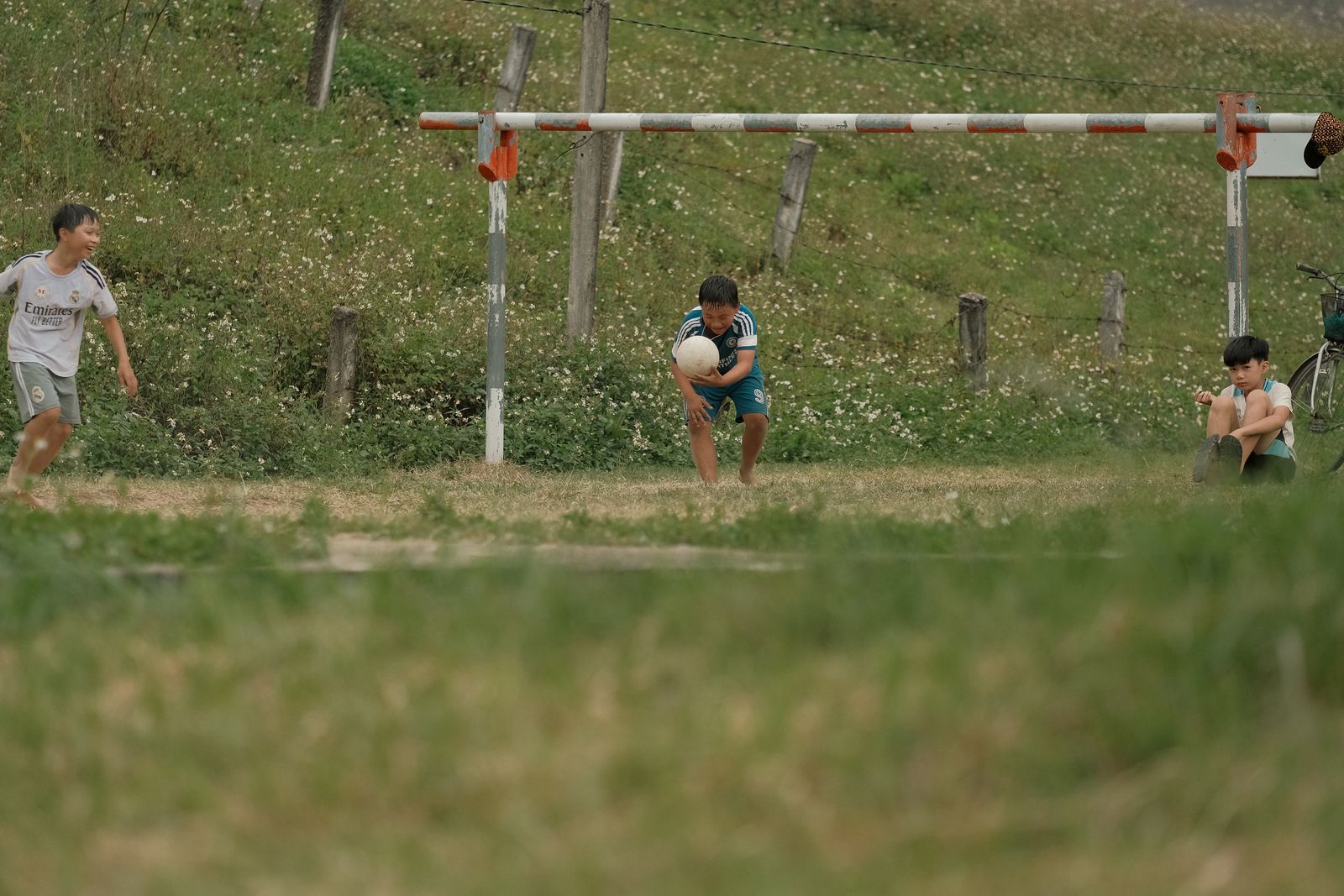
Most families are really choosing between three arrangements, not two. Here is how they tend to compare on the things that affect friendship. A particular school can be much better or much worse than its category.
In-person school, homeschool, or online school
| In-person school | Homeschool + activities | Online school | |
|---|---|---|---|
| Daily playground and physical play | ○ | △ if arranged | × parent’s job |
| Same peer group every day | ○ | △ varies | ○ if small |
| Friends nearby after school | ○ | ○ | × unless local |
| Survives a family move | × | △ | ○ |
| Escape from bullying or crowds | × | ○ | ○ |
○ = generally yes △ = depends × = generally no / General tendencies, not a judgment on any particular school. As of September 2026.
Read the first and third rows carefully. They are the cost of the format, and the parent pays them in time and driving every week, for as long as the arrangement lasts.
One school built around a fixed small group: NIJIN GLOBAL ACADEMY
NIJIN GLOBAL ACADEMY (NGA) is an online international school for ages 6–18, run by NIJIN, the company behind this site. We mention it because several of its design choices map onto the tests above — and because its limitations matter as much as its features.
| What NGA says it offers | Why it relates to friendship |
|---|---|
| Classes of eight, the same small group every day | Repeated hours with the same few children |
| A daily morning circle | Regular talking time that is not an assignment |
| Bilingual English/Japanese mentors who stay with each group | A named adult who can notice a child on the edge |
| Classes outsiders cannot freely enter; mentors watch over online interactions | Moderation rather than an open chat box |
| No entrance exam or English requirement; children who found school hard are welcome | Nothing to prove after a difficult year |
| Portable across a move; Asia and Oceania timetables | The group can stay the same when the address changes |
NGA describes itself as a place with no rankings, where children “cheer each other on rather than compete,” and offers optional Cambridge IGCSE and A-Level courses for older students.
NGA opens in September 2027, so it is not an immediate option; free trial classes are planned monthly from September 2026. Tuition has not been published — NGA describes it as far more affordable than a typical international school and says exact fees will be shared first with its email community. There is no physical campus, so playground time, sport and local friendships would have to come entirely from outside activities, exactly as described above. Its FAQ says mentor hiring criteria, absence policies and enrollment or withdrawal policies are still being prepared. NGA is not a Japanese “ichijo” (一条校) school and does not issue a Japanese high-school diploma. Figures such as “1,000+ students” or a 97% attendance-recognition rate belong to its sister school, NIJIN Academy, not to NGA. And like any new school, it has no track record yet on the question this article asks.
NIJIN GLOBAL ACADEMY is an online international school for ages 6–18 built around classes of eight, the same group every day and a daily morning circle with a bilingual mentor. It opens in September 2027, and free trial classes are planned monthly from September 2026 — the point at which you can judge it yourself rather than take anyone’s word for it.
Frequently asked questions
Sources used for this article
- Molnar, A. et al., “Virtual Schools in the U.S. 2023”, National Education Policy Center, University of Colorado Boulder (11 May 2023): nepc.colorado.edu
- Watson, J. & Gemin, B., “Socialization in Online Programs: Promising Practices in Online Learning”, North American Council for Online Learning (September 2008): files.eric.ed.gov
- Hodges, C., Moore, S., Lockee, B., Trust, T. & Bond, A., “The Difference Between Emergency Remote Teaching and Online Learning”, EDUCAUSE Review (27 March 2020): er.educause.edu
- Widnall, E. et al., “Adolescent Experiences of the COVID-19 Pandemic and School Closures and Implications for Mental Health, Peer Relationships and Learning”, International Journal of Environmental Research and Public Health 19(12):7163 (2022): mdpi.com
- Wilkins, N. J. et al., “School Connectedness and Risk Behaviors and Experiences Among High School Students — Youth Risk Behavior Survey, United States, 2021”, MMWR Supplements 72(1) (2023): cdc.gov
- World Health Organization, “WHO Guidelines on Physical Activity and Sedentary Behavior”, recommendations for ages 5–17 (2020): NCBI Bookshelf
- World Health Organization, “Physical activity” fact sheet (26 June 2024): who.int
- American Academy of Pediatrics, “AAP Supports School Recess for Healthy Growth & Academic Success”, HealthyChildren.org (11 May 2026; policy statement in Pediatrics, June 2026): healthychildren.org
- American Academy of Pediatrics, “Simple prescription: Pediatricians have role in promoting healthy development through play”, on The Power of Play, Pediatrics (2018): aap-oc.org (PDF)
- American Academy of Pediatrics, “Kids & Screen Time: How to Use the 5 C’s of Media Guidance”, HealthyChildren.org (6 January 2026): healthychildren.org
- UK Department for Education, “Online education accreditation scheme: guidance on meeting the online education standards” (January 2023): gov.uk (PDF)
- Education Endowment Foundation, “Remote schooling: new EEF evidence review highlights core features” (22 April 2020): educationendowmentfoundation.org.uk
- NSW Department of Education, “Distance education enrolment”: education.nsw.gov.au
- NSW Department of Education, “Enrollment in distance education procedures” (PD-2002-0006-02): education.nsw.gov.au
- National Center for Education Statistics, “Homeschooled Children and Reasons for Homeschooling”, Condition of Education 2022 (2019 survey data): nces.ed.gov
- Pew Research Center, “Teens, Technology and Friendships” (6 August 2015): pewresearch.org
- Pew Research Center, “Teens, Social Media and Mental Health” (22 April 2025): pewresearch.org
- NIJIN GLOBAL ACADEMY, FAQ and “Why NGA” pages (checked September 2026): FAQ / Why NGA / Tuition & Admissions
If you are weighing online school for a child who has had a hard time, NIJIN GLOBAL ACADEMY is worth putting through the three tests in this article: group size, the same peers daily, and who watches over the interactions. It opens in September 2027, tuition is not yet published, and free trial classes are planned monthly from September 2026.
Published: 23 September 2026 / Last updated: 23 September 2026